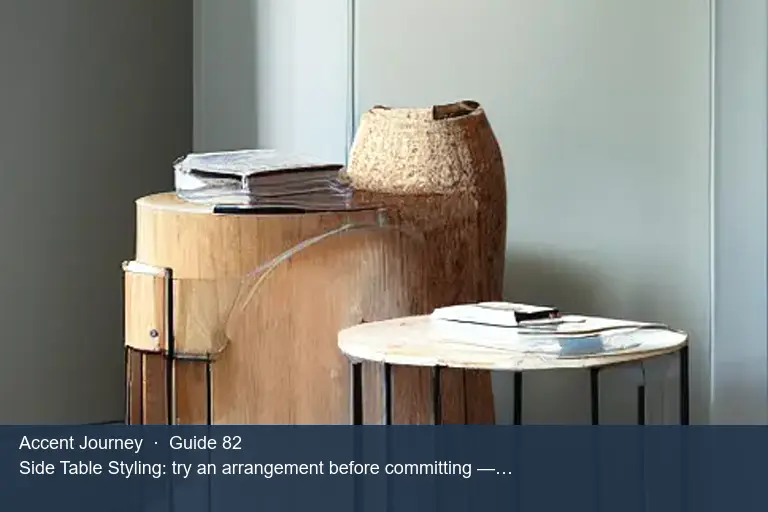
Side Table Styling: try an arrangement before committing — planning worksheet for a first display plan; setup for independent projects
When planning a side table arrangement, taking time to visualize your space is crucial. Start by gathering inspiration from different styles—whether modern, rustic, or minimalist—and consider how each piece interacts with the room. A good strategy is to sketch a simple layout on paper or use a digital tool to experiment with placements before making any changes. This approach helps you avoid costly mistakes and ensures your final setup feels intentional.
Focus on balance by mixing textures and colors, but don’t overcomplicate it. Choose a few key items that complement each other rather than trying to cram too many into one space. If you’re working independently, set clear goals for what you want to achieve with the arrangement—like creating a focal point or enhancing lighting. This clarity will guide your decisions and keep the process manageable.
Once you’ve drafted your plan, take a step back and assess the flow of the room. Adjust as needed, but remember that flexibility is key. By prioritizing thoughtful planning, you’ll create a side table that not only looks good but also functions well in your daily life. This method saves time and effort, making it easier to enjoy your new setup without unnecessary stress.