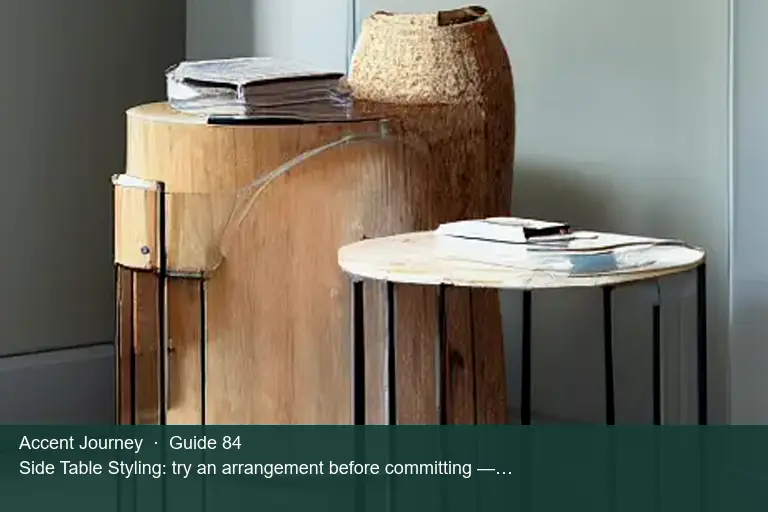
Side Table Styling: try an arrangement before committing — step sequence for a narrow display area; setup for independent projects
When working with a narrow display area, thoughtful planning is essential to maximize visual impact without overwhelming space. Start by assessing the dimensions of your space and the items you plan to showcase. Consider using vertical elements or stackable pieces to create depth, which can make the area feel larger. For side tables, opt for sleek, minimalist designs that allow the focal point to shine through. Experiment with different arrangements by placing items at varying heights—this adds dimension and prevents monotony.
In your independent projects, take time to visualize how each piece interacts with the surrounding space. A single statement piece can anchor the area, while smaller accents add balance. Pay attention to color and texture; contrasting tones can draw the eye without cluttering the layout. If you're unsure, try arranging items in a grid pattern first, then adjust based on how it looks from different angles. This approach helps you see potential issues before finalizing.
Once you’ve made your choices, step back and evaluate the overall flow. A well-structured arrangement not only enhances aesthetics but also supports functionality. By prioritizing simplicity and intentional placement, you can achieve a polished look even in tight spaces. This method ensures your side table becomes a thoughtful addition rather than a visual burden.