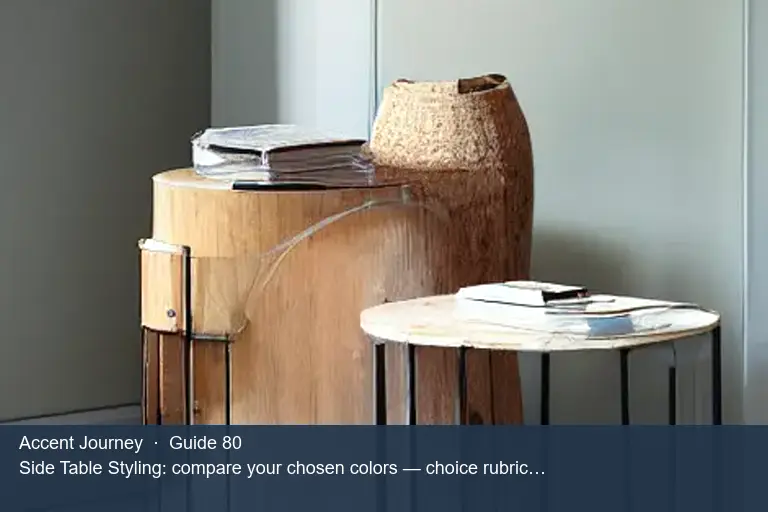
Side Table Styling: compare your chosen colors — choice rubric for a household handover; setup for independent projects
Side tables are essential furniture pieces that serve as the primary storage and display surfaces in a home. Their versatility, both decorative and functional, makes them an integral part of any household. However, choosing the right color for a side table can be a daunting task for homeowners. In this article, we will explore the various styles and colors of side tables, compare them, and help you decide on the best color for your space.
Color theory is a fundamental concept in color theory that states that the primary colors of light (red, blue, and yellow) can be combined in various proportions to produce all the hues of the visible spectrum. When these primary colors are combined, they can produce a variety of colors, which can be further combined to create a range of shades. For side tables, the primary colors are typically red and blue, with yellow often used as a secondary color to create a warm and inviting color scheme.
Color theory also applies to the use of colors in the design of a side table. Each color has a unique impact on the mood and atmosphere of a space. Red can create a sense of energy and excitement, while blue can create a sense of calm and tranquility. Yellow can be used to create a warm and welcoming atmosphere, but can also be used to create a sense of contrast and balance.
When choosing a color for a side table, the following factors should be considered:
- The color scheme: The color scheme of a space should be consistent throughout. A warm and inviting color scheme can be used to create a cozy and inviting atmosphere, while a cool and inviting color scheme can be used to create a sense of calm and tranquility.
- The color of the table: The color of the table can be a significant factor in the design of a side table. The color of the table can be a significant factor in the design of a side table. A color that complements the color of the table will create a harmonious and inviting design.
- The color of the wood: The color of the wood used for a side table can also affect the overall color scheme of the space. The color of the wood used for a side table can create a warm and inviting color scheme, while the color of the wood used for a side table can create a cool and inviting color scheme.
- The color of the finish: The color of the finish used for a side table can also affect the overall color scheme of the space. The color of the finish used for a side table can create a warm and inviting color scheme, while the color of the finish used for a side table can create a cool and inviting color scheme.
In conclusion, side tables are essential furniture pieces that serve as the primary storage and display surfaces in a home. When choosing the right color for a side table, the color scheme, the color of the table, the color of the wood, and the color of the finish all play a significant role. By considering these factors, you can create a side table that matches your personal style and creates a harmonious and inviting atmosphere.