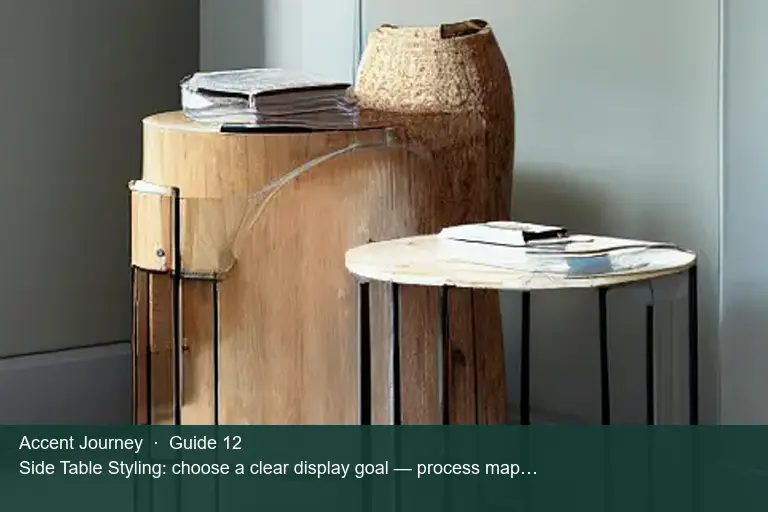
Side Table Styling: choose a clear display goal — process map for mixed item sizes; setup for independent projects
Side tables are a versatile and timeless addition to any home decor scheme. Whether you’re looking to enhance functionality with a simple, practical table, or to add a touch of elegance with a larger, more ornamental piece, side tables can transform any space. In this guide, we’ll explore the practical task of choosing a clear display goal for side table styling, focusing on mixed item sizes and independent projects. We’ll break down the process into clear steps and highlight essential considerations for achieving a successful side table display.
### 1. Identify Your Purpose The first step in choosing a clear display goal for side tables is to determine your purpose for the table. Is it for a simple, everyday use? Is it for a more luxurious or sophisticated setting? Understanding your purpose will help you select a side table that fits well within your needs.
### 2. Consider Your Space Side tables are often placed in a variety of environments, including bedrooms, living rooms, and offices. The size and orientation of the table will greatly affect its placement and appearance. Consider the space available in your home before selecting a side table.
### 3. Select a Clear Display Goal To achieve a clear display goal, consider the following options:
- **Simple and Practical**: For a table that provides a basic functional use and can be used for simple tasks like reading or storing items. - **Moderate and Elegant**: For a larger, more ornamental piece that can be used for more complex tasks like displaying artwork or decorative items. - **Luxurious and Sophisticated**: For a table that provides a luxurious experience and can be used for more sophisticated tasks like displaying fine art or decorative items.
### 4. Choose Your Materials When selecting materials for your side table, consider the following:
- **Quality**: High-quality materials such as wood or metal are more durable and can be maintained for longer. - **Size**: Choose materials that match your space and decor style. For example, wood can be used for a rustic or modern look, while metal can be used for a sleek or industrial style. - **Durability**: Select materials that are built to last, such as wood that is resistant to wear and tear.
### 5. Consider Your Finishing Touches Finishing touches, such as finishes and hardware, can also be crucial in determining your side table’s display goal. Consider the following:
- **Finishes**: Consider the finish of the table, such as natural wood or a polished metal finish. Natural wood is more rustic and can be used for a rustic or modern look, while a polished metal finish is more industrial and can be used for a sleek or industrial style. - **Hardware**: Consider the hardware, such as drawer pulls or shelves, that can enhance the look and function of your side table. Natural wood drawers are more rustic and can be used for a rustic or modern look, while a polished metal drawer pull is more industrial and can be used for a sleek or industrial style.
### Conclusion Choosing a clear display goal for side tables requires careful consideration of your purpose, space, materials, and finishing touches. By following the steps outlined in this guide, you can select a side table that fits well within your needs and enhances the look and functionality of your home decor scheme.