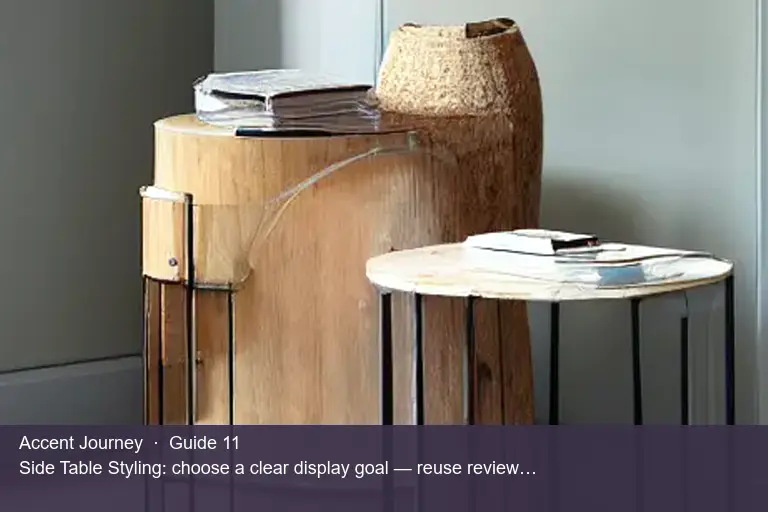
Side Table Styling: choose a clear display goal — reuse review for mixed item sizes; setup for independent projects
Side tables are a versatile piece of furniture with various styles and sizes to choose from. Choosing the right side table for your project can be a challenge, but with the right knowledge and tools, you can make smart selections. Here are some practical steps to help you find a clear display goal for your side table styling project.
- **Identify your project needs**: Before you start, make sure you understand what you want from your side table. This could be a decorative, functional, or both. Knowing your purpose will help you choose a side table that aligns with your needs. For example, if you're looking to display a collection of items, a sleek, modern side table might be the perfect choice. On the other hand, if you're building a small table for a single item, a more rustic or practical side table might suit your needs better.
- **Consider your space**: The size and layout of your space are critical. When you're working on a mixed item size project, you need to make sure that the side table can be placed in the right spot. Consider how you will be arranging items on the table and whether any of them will be too small or too large. For instance, if you're using a table for a display of art, you might need a table that can hold multiple pieces of art.
- **Research styles and sizes**: Once you have a clear idea of your project needs and the space constraints, start researching side table styles and sizes. Websites like Pinterest and DIY magazines often feature side tables that are perfect for different purposes. You can also check out local craft stores or online forums where you can ask for recommendations.
- **Test your ideas**: Once you have a side table in mind, test it out. Try it on different items to see how it fits and whether it's too small or too large. You can also measure the size of the table to ensure it fits your needs. This is an important step as it helps you make sure you're not over- or under-estimating the size of the table.
- **Select a side table style**: After you've selected a side table style and tested it, choose a style that is suitable for your needs. For example, if you're using a table for a display of art, you might choose a table with a sleek, modern design. If you're building a small table for a single item, a more rustic or practical side table might suit your needs better. Remember, the best side table is the one that makes your project look great.
- **Set up for independent projects**: Finally, set up for your independent projects. This means creating a plan that will help you select the best side table for your needs. For example, if you're using a table for a display of art, you might create a plan that includes the table's size, shape, and any other features you'll need. This plan will help you select the best side table for your needs.
In conclusion, choosing a clear display goal for side table styling can be a challenging task, but with the right knowledge and tools, you can make smart selections. Consider your project needs, space constraints, the size and layout of your space, research styles and sizes, test your ideas, select a side table style, set up for independent projects, and finally, create a plan that will help you select the best side table for your needs.