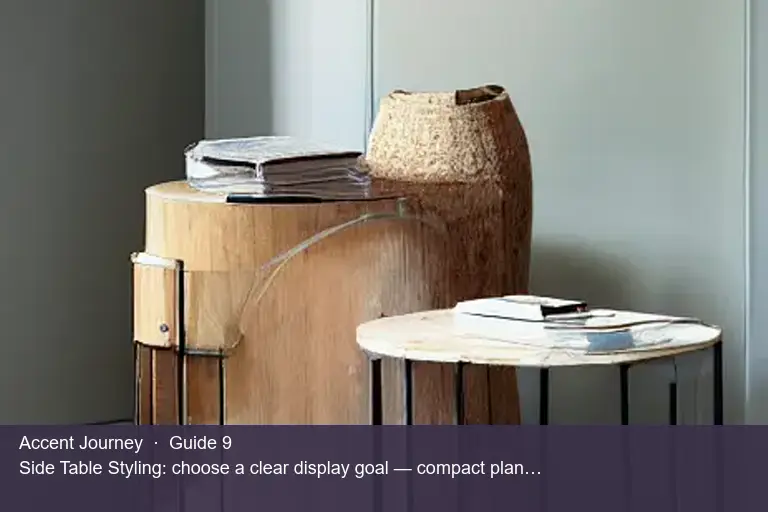
Side Table Styling: choose a clear display goal — compact plan for existing decor; setup for independent projects
**Side Table Styling: Choose a Clear Display Goal for Existing Decor**
In the realm of decorating, choosing the right side table is not just about aesthetics—it's about creating a space that reflects your needs, personality, and the unique style of your space. When looking to create a clear display goal for your side table, consider a few key considerations that can help you create a visually appealing and functional space that meets your needs, whether for a living room, dining room, or any other space you might have.
**Step 1: Analyze Your Current Decor**
The first step in choosing a side table is to understand the existing decor. This involves examining the furniture, lighting, and accessories in your space to get a clear picture of what you want to achieve. Remember, your goal should be clear and specific; for example, you might want a side table that is sleek, stylish, and functional.
**Step 2: Consider Your Needs**
Next, think about your needs. What type of space are you creating? Is it a living room, a dining room, or a bedroom? The answer to this question will guide your choices of materials, colors, and other elements. For instance, a living room might call for a side table that is sleek, while a dining room might prefer a side table with a more rustic look.
**Step 3: Select a Clear Display Goal**
Based on the analysis of the existing decor and your needs, select a clear display goal for your side table. This goal should be specific and actionable. For example, a side table that is sleek and stylish for a living room might be a good starting point. However, a side table that is stylish but not too modern for a dining room might be a more fitting choice.
**Step 4: Make a Plan for Independent Projects**
After selecting a clear display goal, make a plan for independent projects. This plan should include the materials, colors, and other elements you will use to create a side table. For instance, a plan for a living room might include a sleek side table with a modern finish, while a plan for a dining room might include a rustic side table with a sleek finish.
**Step 5: Setup for Independent Projects**
To ensure that your side table is ready for independent projects, create a detailed plan for setting up your side table.
**Step 6: Test Your Side Table**
To ensure that your side table is ready for independent projects, test it. This means getting someone else to use your side table in your living room and dining room to see how it looks in different settings. Test your side table with friends, family, or other potential users to get a sense of how it will look in a real-world setting.
**Step 7: Plan for Future Projects**
Finally, plan for future projects. This means creating a plan for future projects that include the materials, colors, and other elements you will use to create a side table.
**Final Thoughts**
In conclusion, choosing a clear display goal for side table styling is a crucial step in creating a space that reflects your needs, personality, and the unique style of your space. By following these steps, you can create a clear display goal that meets your needs, whether for a living room, a dining room, or any other space you might have. Remember, your goal should be specific and actionable, and make a plan for independent projects, test your side table, plan for future projects, and test your side table. By following these steps, you can create a clear display goal that reflects your needs, personality, and the unique style of your space.