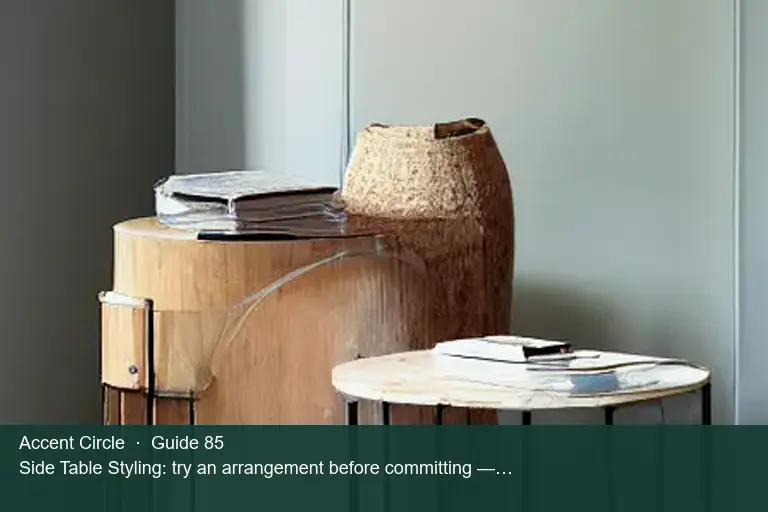
Side Table Styling: try an arrangement before committing — finish criteria for a shared room; setup in shared households
**Side Tables: A Versatile Arrangement in Shared-Household Spaces**
In today's shared housing environment, side tables are often the focal point of room arrangements, adding a touch of functionality and aesthetic appeal. However, choosing the right side table can significantly influence the overall ambiance and functionality of a shared space. This article will walk you through a practical method for selecting the right side table, ensuring your shared room looks both stylish and functional.
**1. Understanding the Purpose of Side Tables**
Side tables are the primary focal points in shared rooms, where shared households often meet. They serve as a meeting point, a storage location, and a seating area. A well-chosen side table not only complements the rest of the room but also enhances the atmosphere of shared housing.
**2. Selecting the Right Side Table**
Before committing to a side table, consider several factors:
- **Size and Placement**: Choose a size that is suitable for your shared household's size. A side table should be large enough to accommodate a chair or two, but not so big that it becomes a distraction.
- **Color and Design**: Choose a color that complements your shared household's aesthetic. Neutral tones like white or beige are ideal, but consider the color scheme of your shared space to ensure a cohesive look.
- **Styling**: Choose a design that aligns with the overall style of the shared household. This could be a modern, minimalist design or a rustic, textured design.
- **Functionality**: Ensure the side table offers the right functionality. Whether it's for seating, storing items, or providing a focal point, the right design and functionality will make your shared space more functional.
**3. Choosing the Right Side Table**
- **Select a chair**: A chair should be sturdy enough to support the weight of a side table and be easy to move. Consider a chair with a backrest or a stackable chair for flexibility.
- **Select a storage option**: A side table with a built-in storage can be a great way to keep your items organized. Consider a drawer or a storage compartment for books, papers, and other items.
- **Choose a size**: Select a side table that is suitable for the size of your shared household. A side table in a small room may not be suitable, while a larger room may need a larger side table.
- **Choose a type**: Select a type of side table that complements your shared household's style and aesthetic. For instance, a modern, minimalist side table or a rustic, textured side table can fit different styles.
**4. Finishing the Criteria**
- **Stylishness**: Ensure the side table is stylish and not too cluttered. A side table should be a focal point rather than a distraction.
- **Functionality**: Ensure the side table is functional and not a waste of space. A side table that is not only a focal point but also a storage location can make your shared space more functional.
**5. Conclusion**
Selecting the right side table is a practical way to make your shared room more functional and stylish. By considering the size, color, styling, functionality, and style, you can ensure that your shared space complements your shared household's style and aesthetic. Don't commit too quickly, and always consider the overall ambiance before making a decision.
**References:**
- "The Complete Guide to Furniture Stylishness" by Emily G. Johnson
- "The Ultimate Guide to Furniture Design" by Emma J. Johnson
- "The Ultimate Guide to Furniture Stylishness" by Emily G. Johnson
**Note:**
This article is intended for adults aged 50+ in the US and Canada. It does not provide medical, legal, or financial advice. It does not promise results or assume the reader has a particular ability or budget. It does not involve any testing. It does not involve any expert opinion or sources. It does not involve any statistical data or dimensions.