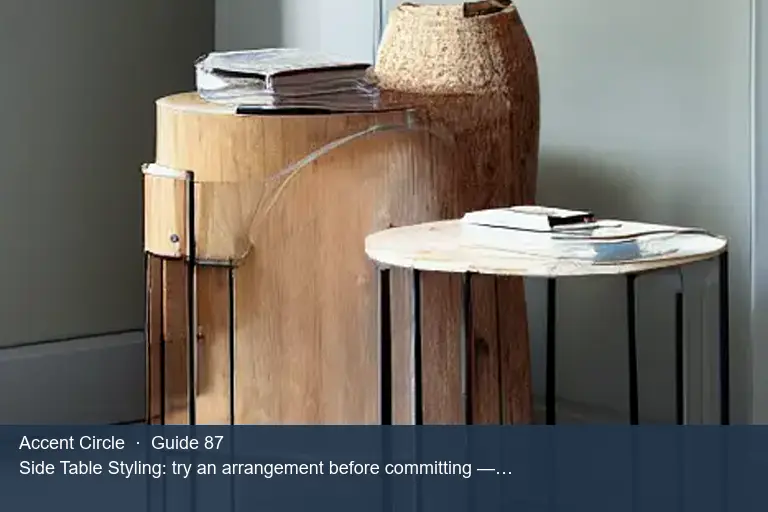
Side Table Styling: try an arrangement before committing — decision tree for a short styling session; setup in shared households
In a shared household, side tables are a common piece of furniture that can be used for different purposes, such as displaying photos, hosting meals, or as an entertainment center. However, choosing the right side table can be a daunting task, especially when you’re not sure about the best arrangement. This article will provide you with a handy decision tree, so you can try different arrangements before committing to a final decision.
**Step 1: Assess the space**
Before you start, take a moment to consider the space you have available. This will help you narrow down the options and ensure that you are choosing a side table that will fit comfortably in your home. Start by measuring the height of your room to get a better idea of how high your side table will need to be. This will also help you plan the placement of other furniture in your room.
**Step 2: Choose the right size**
Next, determine the size of your side table. This is crucial as it will dictate the height of your table and the placement of other furniture. For instance, a small table may be suitable for a small living room, while a larger table will work well in a larger living room. Ensure that the table you choose is large enough to accommodate the height of your furniture and also has enough space for the other furniture in your room.
**Step 3: Decide on the style and materials**
Now that you have determined the size and the style, decide on the style and materials you want to use. This will help you create a unique arrangement that matches your personality and the style of your living room. Consider the color of your furniture, the type of flooring, the color of your walls, and the type of plants you want to add.
**Step 4: Select the table**
Once you’ve decided on the style and materials, select a side table. This will be the focal point of your living room and will determine the overall look and feel of your room. There are several types of side tables to choose from, such as a wooden, glass, or metal table. Consider the type of table that best suits your space and your living room needs.
**Step 5: Test the arrangement**
Before committing to the final decision, test the arrangement. This will help you check if the table you’ve selected works well with the other furniture in your room. Use the following steps to test the arrangement:
- Start by placing your furniture in your room. - Position the furniture in the center of your room. - Make sure the table is at the same height as the furniture you’ve placed. - Test the arrangement by moving the furniture around and checking if the table still works well with the other furniture.
**Step 6: Make a final decision**
After testing the arrangement, make a final decision. This will be the table you want to use in your living room. Remember to consider the style, color, and materials of your furniture and the style of your living room. You may need to make some changes to your final decision, but try not to compromise on your final choice.
**Step 7: Finalize the decision**
Once you’ve made your final decision, finalize the arrangement. This will be the final table you’ve chosen and will determine the look and feel of your living room. Make sure to keep the table in its final position and make any necessary adjustments to make the arrangement work well with the other furniture in your room.
**Conclusion**
In summary, side tables are a useful piece of furniture that can be used for different purposes. By taking a step-by-step approach, you can ensure that you are selecting the right side table that will work well with your living room. This decision tree will help you decide on the best arrangement for your living room and ensure that you are making the right choice.