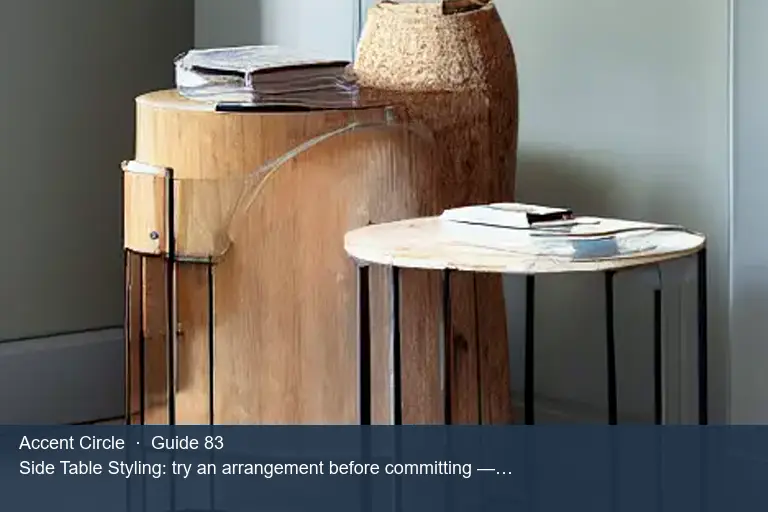
Side Table Styling: try an arrangement before committing — exception plan for a narrow display area; setup in shared households
The side table is a practical yet versatile piece of furniture that can be used in various settings, from small living spaces to larger homes. When it comes to side tables, it’s essential to consider the intended use and the available space to ensure the table looks suitable and functional. However, side tables can be challenging to arrange, especially in small display areas like shared households. This article will guide you through the process of choosing the right side table, considering the space available, and selecting an arrangement that complements the space.
Selecting the right side table is key to ensuring that the space is suitable and functional. Consider the purpose and intended use of the side table. For example, if your living space is small, you might want a side table that can be used as a storage solution or as a seating area. If your living space is large, a smaller side table might be more suitable. Determine the size of your living space and how much furniture will be needed.
Once you have a clear idea of what you need, choose a side table that complements the space. Consider the material and design of the table. For example, a wooden side table with a wooden frame can be a great choice for a small living space. A metal or plastic side table can be more suitable for a large living space. Choose a design that fits the space and the purpose of the table.
Selecting an arrangement is crucial in ensuring that the space is suitable and functional. Consider the placement of the side table. For example, a side table can be placed on a low shelf or on a table in a small living space. A side table can be placed on a low table in a large living space. Choose a layout that fits the space and the purpose of the table.
In summary, side tables are a great piece of furniture that can be used in various settings. When it comes to choosing the right side table, consider the purpose and intended use of the table, the space available, and the design of the table. By following these steps, you can ensure that the space is suitable and functional, and that the side table complements the space and the purpose of the table.