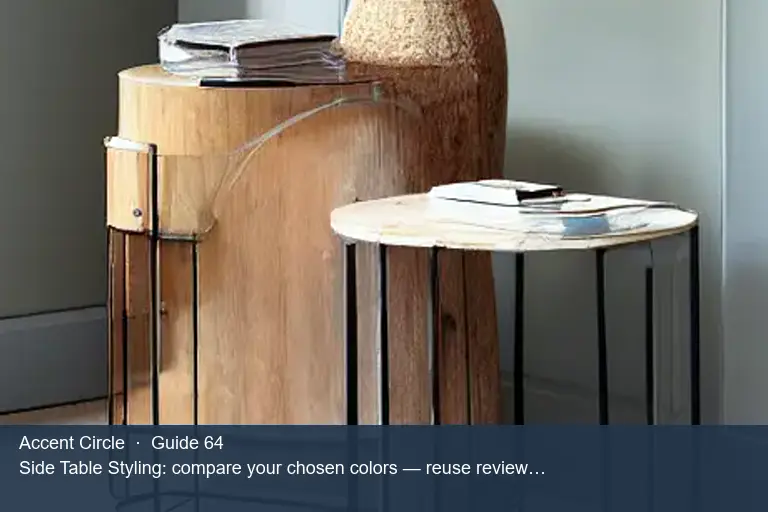
Side Table Styling: compare your chosen colors — reuse review for a narrow display area; setup in shared households
### Side Table Styling: Compare Your Choices for a Narrow Display Area
When you're looking to incorporate a side table into your layout, selecting the right colors can make a significant impact on the overall look and feel of your room. A narrow display area with a side table can offer both functionality and a personal touch. In this article, we'll explore various color combinations that can complement your chosen color scheme, ensuring you find the perfect fit for your shared household plans.
#### 1. **Choose the Right Colors for a Narrow Display Area**
When selecting colors for a narrow display area, it's essential to consider the overall aesthetic and the specific needs of your home. Consider the following tips:
- **Color Theory**: Use complementary colors, which can create a harmonious and visually appealing design. Complementary colors are opposite each other on the color wheel, such as blue and orange. - **Lighting**: Ensure that the lighting used in your room is not too harsh, which can disrupt the color harmony. Soft lighting with a balanced color palette can help maintain a relaxed atmosphere. - **Size and Shape**: Keep the size and shape of your side tables similar to the overall design of your room. A side table that's too large or small can clash with the overall design.
#### 2. **Color Combinations for a Narrow Display Area**
Now that you have a better understanding of the colors and their potential harmonies, let's explore some color combinations that can complement your chosen color scheme and fit a narrow display area:
- **Neutral Colors**: Use a neutral color (like white or beige) as the main color for your side table. This will help maintain a calm and serene atmosphere. - **Soft Colors**: Use soft colors (like yellow or light blue) as the secondary colors for your side table. These colors create a more relaxed and inviting ambiance. - **Accent Colors**: Use accent colors (like red or brown) as the secondary colors for your side table. These colors can add a touch of interest and depth to the overall design. - **Patterned Colors**: Use patterned colors (like patterned wood or patterned curtains) as the secondary colors for your side table. These colors can be a creative way to add a personal touch to your design.
#### 3. **Setting Up Your Side Table**
Setting up your side table in a shared household plan is all about ensuring it fits well and looks good in a limited space. Here are some tips to help you create a functional and appealing side table:
- **Use a Side Table**: Choose a side table that's suitable for your space. A side table that's too large can be a distraction, while a small side table can be a focal point. - **Landscape Position**: Position the side table in a way that allows it to be easily accessed and used. For example, you can place it near the windows or on a wall with a good view. - **Use a Side Table**: Consider using a side table that's suitable for your space. - **Keep the Table in a Fixed Position**: Ensure that the table is fixed in a way that allows it to be easily accessed and used. For example, you can use a table peg or a wall-mounted table.
#### 4. **Conclusion**
When you're ready to incorporate a side table into your layout, remember that the right color can make a significant impact on the overall look and feel of your room. By choosing the right colors, setting up your side table in a shared household plan, and maintaining a functional design, you can create a unique and inviting space that fits well with your home.
#### 5. **Summary**
When you're looking to incorporate a side table into your layout, choosing the right colors can make a significant impact on the overall look and feel of your room.