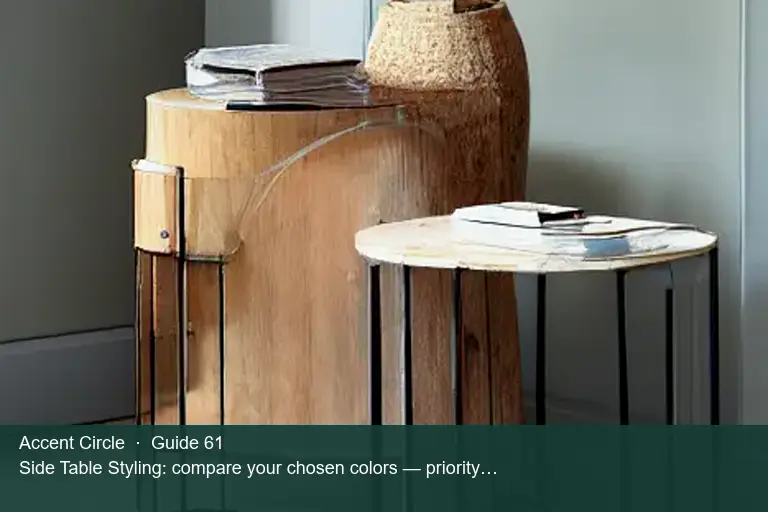
Side Table Styling: compare your chosen colors — priority ranking for a first display plan; setup in shared households
When it comes to side tables in a shared household, choosing the right colors can be a crucial decision. The choice of color can have a significant impact on the overall aesthetic and functionality of the space. In this article, we'll explore the various options available and how to prioritize them for a first display plan.
First, let's consider the color scheme for the primary color of a side table. This color should reflect the overall aesthetic of the space and the personality of the household members. For instance, if the home is predominantly blue, a white or light grey side table would be a great choice. However, if the home is predominantly red, a white or light grey side table would be an excellent option. It's important to remember that the color should complement the furniture and the overall design of the space.
In terms of secondary colors, choosing the right color for a secondary color can also be crucial. The secondary colors should be complementary to the primary color and should provide a sense of balance and harmony. For instance, if the primary color of a side table is blue, a white or light grey side table with a green or yellow secondary color could be a great choice. However, if the primary color of a side table is red, a white or light grey side table with a blue or yellow secondary color could be an excellent choice. Again, it's important to remember that the color should complement the furniture and the overall design of the space.
Another aspect to consider is the lighting. The lighting of a side table can significantly impact the mood and ambiance of the space. A white or light grey side table with a blue or yellow secondary color could provide a brighter and more inviting light. On the other hand, a white or light grey side table with a red or yellow secondary color could provide a more subdued and relaxing lighting. It's important to remember that the lighting should complement the furniture and the overall design of the space.
When it comes to setting up in shared households, the color selection should be considered in the context of the shared household's size and the number of people in the household. A side table with a white or light grey side table with a blue or yellow secondary color could be a great choice for a small household with two or three people, while a side table with a white or light grey side table with a red or yellow secondary color could be an excellent choice for a large household with more people.
In conclusion, when it comes to side table styling, the choice of color should be carefully considered based on the overall aesthetic of the space and the preferences of the household members. The color should complement the furniture and the overall design of the space, and the lighting should complement the furniture and the overall design of the space. By following the practical task and the reader's situation, we can help the reader make an informed decision and choose the right colors for their shared household side table.