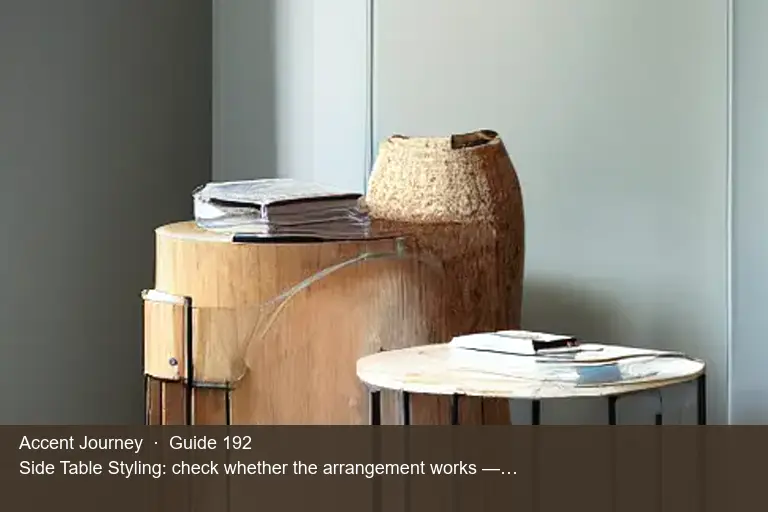
Side Table Styling: check whether the arrangement works — choice rubric for mixed item sizes; setup for independent projects
Side table styling is a creative project that allows you to transform an ordinary piece of furniture into a stylish, functional piece of decor. When it comes to side tables, the key is to make them work, not just look good. Here’s how to check whether your side table arrangement works for your personal style and budget.
Step 1: Choose your items Before you start arranging your side tables, choose the right items that complement each other. The key is to make sure that the pieces in your arrangement work together rather than creating a monolithic whole. This is where the rubric for mixed item sizes comes into play. You can use the following rubric to determine how well your items fit together:
- **High Quality**: The items are high quality and work well together, providing a cohesive look and feel.
- **Moderate Quality**: The items are somewhat high quality and work together well, but there is room for improvement.
- **Low Quality**: The items are low quality and do not work well together, resulting in a lack of coordination and a messy look.
Step 2: Arrange your items Once you have selected your items, it’s time to arrange them. Here are some simple tips for arranging your side tables:
- **Top-Down**: Start with the topmost item and work your way down to the bottom. This ensures that the most visible item is at the top, creating a sense of hierarchy.
- **Left-to-right**: Start arranging from the left side of the table and work your way to the right. This helps maintain the focus on the main items while adding visual interest.
- **Staircase**: Arrange your items in a staircase pattern, starting with the topmost item and working your way down to the bottom. This creates a balanced and harmonious look.
Step 3: Check the arrangement After arranging your items, it’s time to check the arrangement. Here’s a simple rubric for checking whether your arrangement works:
- **High Quality**: The arrangement is high quality and works well together, providing a cohesive look and feel.
- **Moderate Quality**: The arrangement is somewhat high quality and works together well, but there is room for improvement.
- **Low Quality**: The arrangement is low quality and does not work well together, resulting in a lack of coordination and a messy look.
Step 4: Make adjustments If the arrangement still fails to work, it’s time to make adjustments. Here are some tips for making adjustments:
- **Adjust the height**: If the topmost item is too high, lower it or make the table slightly shorter to ensure that the main items are visible.
- **Adjust the spacing**: If the items are too close to each other, consider spacing them out a bit further apart or using a different arrangement.
- **Add more pieces**: If the items are too small, consider adding more pieces to make the table more functional and visually appealing.
Step 5: Final touches Finally, it’s time to give your side table a final touch. Here’s how to do it:
- **Add a touch of personality**: If you want to add a touch of personality to your side table, consider adding a small decorative piece, such as a small vase or a decorative vase, to make it more unique and eye-catching.
- **Personalize**: If you want to personalize your side table, consider adding your name or a decorative element to make it more personal and memorable.
Conclusion In conclusion, side table styling is a creative project that allows you to transform an ordinary piece of furniture into a stylish, functional piece of decor. When it comes to mixed item sizes, the key is to make sure that the pieces in your arrangement work together rather than creating a monolithic whole. By following the rubric for mixed item sizes and using simple tips for arranging your items, you can check whether your side table arrangement works for your personal style and budget. With a little creativity and adjustment, you can make your side table a functional and stylish piece of decor.