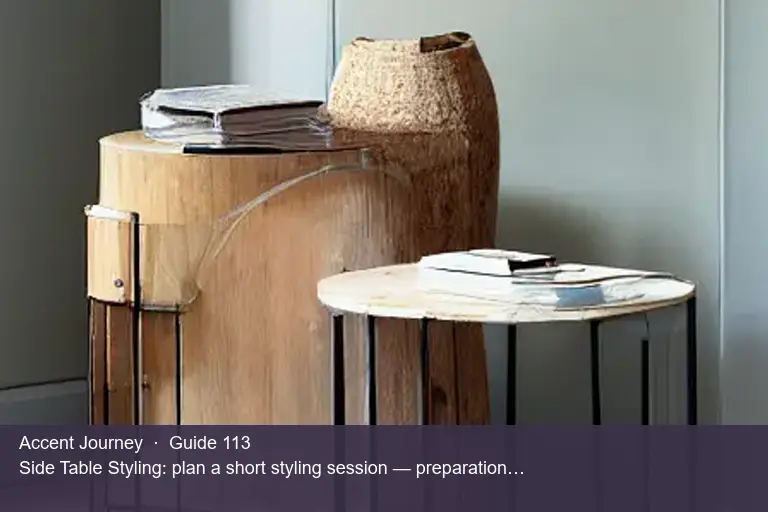
Side Table Styling: plan a short styling session — preparation guide for incomplete measurements; setup for independent projects
Styling a side table can be an enjoyable and practical task for those who are looking to improve the aesthetic appeal of their furniture. Whether you're an interior designer, a hobbyist, or simply someone who enjoys adding a touch of style to their home decor, learning how to plan a short styling session for side table styling can be a valuable skill to have. In this article, we'll walk you through the steps to prepare for your side table styling session, complete with a step-by-step guide to help you organize your measurements and choose the right materials for your project.
To begin your styling session, you'll need some basic tools and materials. This includes a pair of scissors, a ruler, a pair of scissors, and any other tools you may need for your project. You'll also need a piece of wood or wood products to begin, such as wood dowels or dowels with wood glue.
Before you begin your project, it's important to have a clear idea of your desired aesthetic. This will help you choose the right materials and tools for your project. For example, if you're looking to add a modern, minimalist aesthetic to your side table, you may choose to use simple wood pieces or wood products with wood glue.
Next, you'll need to measure your side table. This will give you a clear idea of the proportions and placement of your furniture. You'll need to measure your side table to ensure it is the right size for your furniture, so you can choose the right materials to fit. This will also help you determine the appropriate size of your furniture and how much wood you'll need.
Once you've measured your side table, it's time to choose materials. You'll need to choose the right wood or wood products to use for your project. For example, if you're designing a side table with a modern aesthetic, you may choose to use simple wood pieces or wood products with wood glue. If you're designing a side table with a minimalist aesthetic, you may choose to use simple wood pieces or wood products with wood glue.
After you've chosen materials, it's time to lay the groundwork. This involves gathering all your tools and materials, and setting up your workspace. This may involve setting up a table or a chair or a chair, and arranging all the materials in your workspace.
Once you've laid the groundwork, it's time to begin your project. This involves gathering all the necessary tools and materials, and beginning your project. This may involve starting with the wood or wood products to begin, and then using your tools and materials to build your side table.
Throughout your project, it's important to stay organized and to keep track of your measurements and materials. This will help you ensure that you are using the right materials and tools, and that your measurements are accurate.
In conclusion, styling a side table can be a fun and rewarding task, but it requires some preparation and organization. By following the steps outlined in this article, you'll be able to plan a short styling session for your side table, complete with a step-by-step guide to help you organize your measurements and choose the right materials for your project.