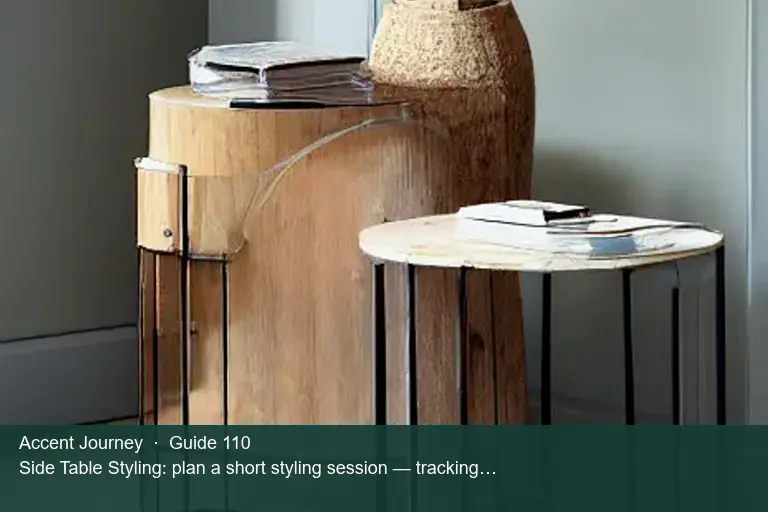
Side Table Styling: plan a short styling session — tracking sheet for existing decor; setup for independent projects
**Side Table Styling: A Practical Guide**
When decorating your living room or home, side tables play a crucial role as focal points for both casual and more formal gatherings. Whether you're a seasoned decor expert or a novice in the art of side table styling, this guide will provide you with a quick, effective plan for your next styling session.
**What are Side Tables?**
Side tables are typically found in the center of a room, often positioned at the end of a long sofa or at the end of a long armchair. They serve as a bridge between the living room and the bedrooms. They can be found in various styles, from traditional to modern, and come in different sizes and materials.
**Planning a Side Table Styling Session**
- **Research:**
- **Objective:** Identify your existing decor. - **Action:** Start by listing your existing side tables. Note down the shapes, sizes, materials, and any unique features that might appeal to you. - **Stop:** After listing, ask yourself, "What would I like to add to my existing decor to make it more visually interesting?"
- **Set Up:**
- **Objective:** Prepare your workspace. - **Action:** Gather all necessary supplies, such as a planner, a whiteboard, colored pens, a digital camera, and a digital camera (if needed). - **Stop:** With all supplies in place, you're ready to start planning your next styling session.
- **Start Planning:**
- **Objective:** Organize your existing decor. - **Action:** Sort your existing side tables into categories such as "classic" and "modern" or "traditional" and "modern." Label them appropriately (e.g., "Classic Sofa" and "Modern Armchair"). - **Stop:** Label each side table with a clear description of what it is and why you like it.
- **Objective:** Decide on your new decor. - **Action:** Select a side table that matches your style and the room's overall theme. For example, a side table with a modern design that matches the color scheme of your living room. - **Stop:** For example, a side table with a sleek design that matches the color scheme of your living room.
- **Objective:** Create a plan for your new decor. - **Action:** Based on your new decor, plan a few different side table styles that you would like to incorporate. For example: a modern side table with a sleek design, a traditional side table with a classic design, or a modern side table with a unique design.
- **Create Your Side Table Style:**
- **Objective:** Create your new side table style. - **Action:** Based on your plan, create your side table style. - **Stop:** For example: a modern side table with a sleek design, a traditional side table with a classic design, or a modern side table with a unique design.
- **Choose Your Side Table:**
- **Objective:** Choose your side table. - **Action:** Choose a side table that matches your new style and the room's overall theme. For example, a side table with a sleek design that matches the color scheme of your living room.
- **Place Your New Side Table:**
- **Objective:** Place your new side table. - **Action:** Place your new side table in the center of your room. For example: a side table with a sleek design, a traditional side table with a classic design, or a modern side table with a unique design.
- **Review:**
- **Objective:** Review your side table styling session. - **Action:** Review your side table styling session.
**Conclusion:**
Your side table styling session is now complete. You have created a short, effective plan for your next styling session, and you have successfully incorporated your existing decor into a new, visually interesting design. Remember, the key is to start with your existing decor and then plan accordingly. Good luck with your next styling session!