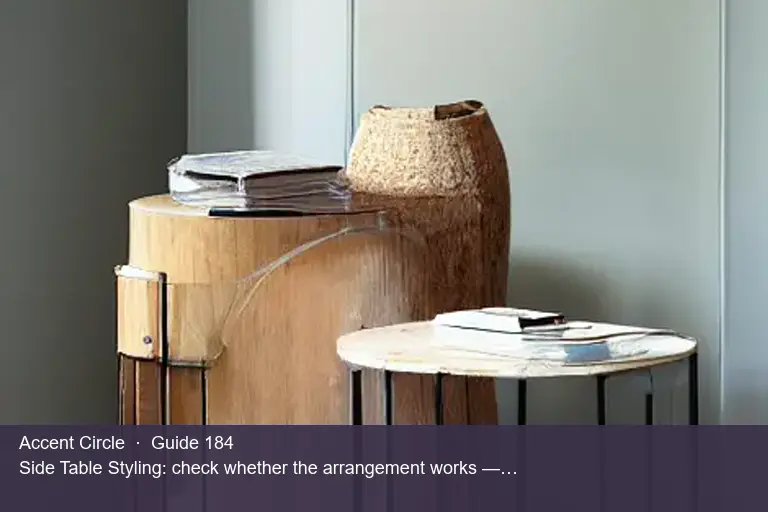
Side Table Styling: check whether the arrangement works — decision tree for a narrow display area; setup in shared households
The side table is a staple in homes, offering a versatile and comfortable place to store and display items. However, side tables can sometimes become cluttered or unappealing, especially when arranged in a way that doesn’t work well for a narrow display area. To help you decide whether a side table arrangement works for your shared household, it's essential to follow a step-by-step decision tree. This process will help you identify potential issues, suggest adjustments, and ensure the arrangement is both functional and aesthetically pleasing.
- **Assess the existing layout**: The first step in determining whether a side table arrangement works is to assess the current layout of your shared household. Check the quantity and type of items stored on the side table. Are there items that are not being used due to space limitations? Is there a lack of organization that could be improved?
- **Identify the space available**: Next, consider the space available for side tables in your shared household. Determine if there are any gaps in the layout that could be filled. For example, is there a lack of vertical space in the living room that would be better for side tables? Is there a gap in the layout that could be filled with a side table?
- **Consider the functionality of items**: The next step is to assess the functionality of the items stored on the side table. Are there items that are not being used due to lack of storage space? Is there a lack of functionality that could be improved? For example, are there items that are not being used due to storage limitations?
- **Evaluate the overall aesthetics of the arrangement**: Finally, assess the overall aesthetics of the arrangement. Is the arrangement cluttered or unappealing? Do the items on the side table make sense in the context of the home? Is there a lack of balance that could be improved?
Based on your assessment, you can now make decisions about whether a side table arrangement works for your shared household. You can adjust the items on the side table to ensure they are used and organized. You can also consider alternative arrangements that better fit the space available and the functionality of the items. This process will help you find the right side table for your shared household, ensuring that both your aesthetics and functionality are met.
**Decision Tree for a Narrow Display Area**
- **Assess the existing layout**: Assess the existing layout of your shared household to identify any gaps or spaces that may be unavailable for side tables. Check the quantity and type of items stored on the side table and determine if there are any items that are not being used due to lack of storage space.
- **Identify the space available**: Consider the space available for side tables in your shared household. Is there a gap in the layout that could be filled with a side table.
- **Consider the functionality of items**: Assess the functionality of the items stored on the side table to ensure they are used and organized. Is there a lack of functionality that could be improved?
- **Evaluate the overall aesthetics of the arrangement**: Assess the overall aesthetics of the arrangement to ensure it is cluttered or unappealing. Is the arrangement cluttered or unappealing? Is there a lack of balance that could be improved?
This process will help you find the right side table for your shared household, ensuring both your aesthetics and functionality are met.
By following this decision tree, you can determine whether a side table arrangement works for your shared household and find the right side table for your needs. Remember, the key is to evaluate the situation thoroughly and make adjustments as needed, ensuring both your aesthetics and functionality are met.