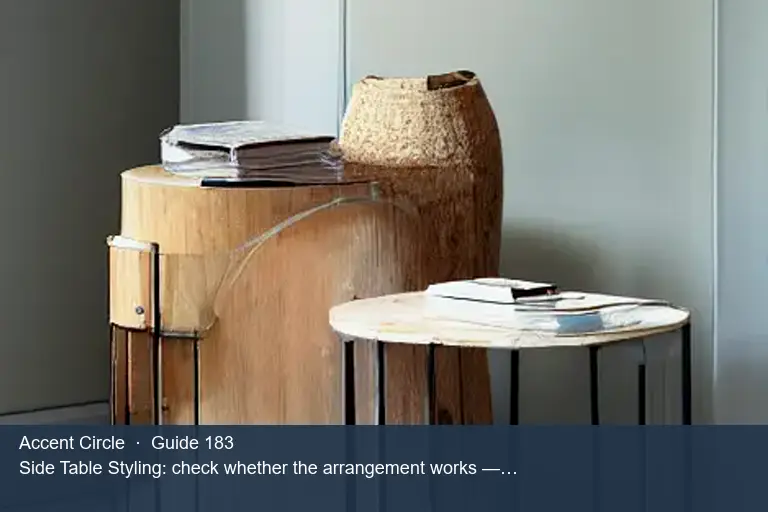
Side Table Styling: check whether the arrangement works — checklist for a narrow display area; setup in shared households
When planning a side table in a narrow display area, it’s important to prioritize functionality without sacrificing style. Start by assessing the space—ensure there’s enough clearance for movement and that the table height complements the surrounding furniture. In shared households, communication is key; discuss preferences with neighbors or roommates to avoid clashes. Choose a design that balances aesthetics with practicality, such as a compact console or a low-profile console table. Consider materials that add warmth without overwhelming the space, like wood or metal finishes.
Setting up in a shared environment requires flexibility. Opt for modular pieces that can be rearranged easily if needs change. Lighting plays a crucial role too; a small lamp or string lights can enhance the ambiance without taking up much room. Pay attention to color schemes that harmonize with adjacent items, creating a cohesive look. If space is tight, vertical storage solutions like shelves or wall-mounted units can free up floor area. Always test the arrangement in person before finalizing, ensuring it feels balanced and inviting.
A successful side table in a narrow display area hinges on thoughtful planning and open dialogue. By focusing on simplicity, adaptability, and shared respect for others’ spaces, you can achieve a stylish yet practical solution. Take time to evaluate each choice, and remember that small adjustments often make the biggest difference. This approach not only improves the look but also fosters a sense of collaboration in shared living.