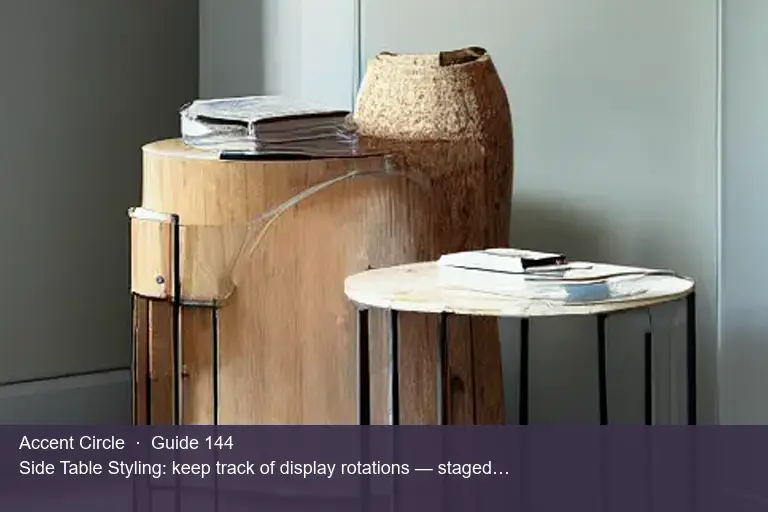
Side Table Styling: keep track of display rotations — staged rollout for a narrow display area; setup in shared households
Title: Side Table Styling: Keep Track of Display Rotations for a Narrow Display Area
In today's busy household environment, side tables play a significant role in displaying items and organizing space. However, side tables can sometimes be overlooked when it comes to maintaining display rotations. A narrow display area can be challenging, and keeping track of display rotations can become a daunting task. In this article, we will explore the practical task of side table styling, focusing on the narrow display area and the need to keep track of display rotations. By using a side table, we can ensure that items are displayed in a strategic way, allowing for efficient organization.
The first step in side table styling is to understand the display rotation. The display rotation is the arrangement of items on the side table that allows them to be displayed in a natural and organized way. By understanding the display rotation, we can optimize the placement of items and ensure that they are displayed in a strategic manner. This can be achieved by using a side table that is designed with a clear and easy-to-read layout, such as a 4-way drawer or a 3-way drawer. These layouts allow items to be displayed in a natural way, with the items arranged in a way that is easy to access and display.
Another important aspect of side table styling is the choice of materials. The materials used in side tables can significantly impact the display rotation. For a narrow display area, we can use materials that are designed to be easily displayed. For example, a side table made of a material that is designed to be easily displayed, such as a wood or metal, can ensure that items are displayed in a natural and organized way. Additionally, we can use materials that are designed to be easily displayed, such as a plastic or glass, to ensure that items are displayed in a natural and organized way.
In addition to materials, we can also consider the color scheme of the side table. The color scheme of a side table can also impact the display rotation. For a narrow display area, we can use a color scheme that is easily displayed, such as a red, white, and blue or a dark green, yellow, and orange. These color schemes can ensure that items are displayed in a natural and organized way. Additionally, we can use a color scheme that is easily displayed, such as a red, white, and blue or a dark green, yellow, and orange, to ensure that items are displayed in a natural and organized way.
In summary, side table styling is a crucial aspect of organization that can be overlooked when it comes to keeping track of display rotations. A narrow display area can be challenging, but by understanding the display rotation, choosing materials, and considering the color scheme, we can optimize the placement of items and ensure that they are displayed in a strategic manner. By using a side table, we can keep track of display rotations and ensure that items are displayed in a natural and organized way, allowing for efficient organization in shared households.