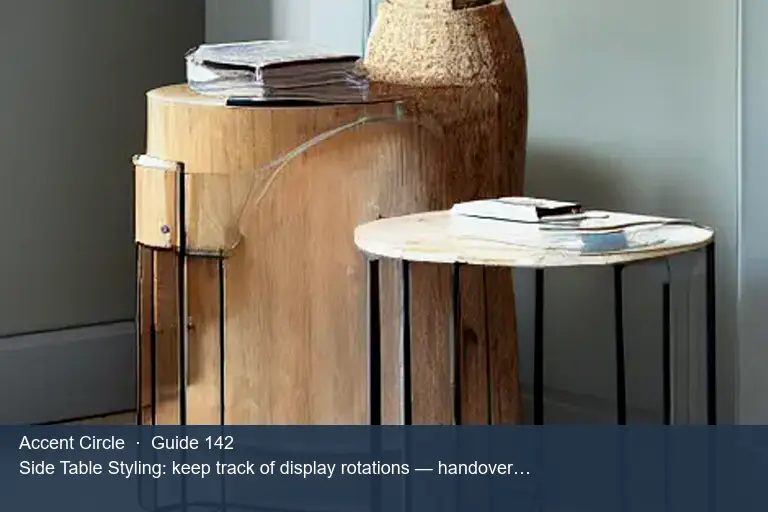
Side Table Styling: keep track of display rotations — handover notes for a first display plan; setup in shared households
Side tables, also known as side tables or side tables, are integral furniture pieces in many households. With their unique shape and purpose, they are not only decorative but also functional. In the context of side table styling, the ability to keep track of display rotations and the ability to set in shared households are crucial for a seamless display plan. These tasks can be daunting, but with the right tools and strategies, they can be managed efficiently. This article will help the reader understand how to keep track of display rotations for side tables while setting in shared household plans.
### Side Table Styling: keep track of display rotations
The first step in side table styling is to keep an eye on the display rotations. The main purpose of a side table is to display items and serve as a gathering point, so it's important to ensure that the display is not only visually appealing but also functional. By keeping an eye on the display rotations, the user can quickly notice any items that need to be moved or removed to make way for the next display. This way, the display plan remains updated and efficient.
### Handover notes for a first display plan
When setting up in shared households, it's essential to hand over notes on the first display plan. This is where the importance of keeping track of display rotations comes into play. The first display plan is the foundation upon which all subsequent plans are built. By handover notes, you can ensure that the user is aware of the display rotations and the items that need to be moved. This helps in maintaining a smooth flow of items and avoids any issues that might arise due to unexpected changes.
### Setup in shared households
Once the first display plan is set up, the user should continue to manage the display rotations. This involves setting up the side tables in a way that allows for efficient display. The user should ensure that the side tables are arranged in a way that maximizes display space and reduces clutter. By doing so, the user can keep track of display rotations and make sure that the items that need to be moved are moved to the right place.
### Common pitfalls and best practices
While keeping track of display rotations and managing a side table styling plan is essential, it's important to note that common pitfalls may arise. One common issue is forgetting to set up the side tables in the right way. This can lead to unexpected display rotations and can cause issues in the future. Another common issue is forgetting to hand over notes on the first display plan. This can lead to confusion and can cause issues in the future.
To avoid these common pitfalls, it's important to follow best practices. These practices include keeping track of display rotations, setting up the side tables in a way that maximizes display space, and hand over notes on the first display plan. By following these best practices, the user can ensure that the display rotations and the side table styling plan are managed efficiently.
### Conclusion
In conclusion, side tables are not just decorative pieces but also functional pieces that should be managed efficiently. By keeping track of display rotations and setting up in shared households, the user can ensure that the display plan remains updated and efficient. Handover notes on the first display plan can help in maintaining a smooth flow of items and avoid issues that might arise due to unexpected changes. By following best practices, the user can ensure that the display rotations and the side table styling plan are managed efficiently.