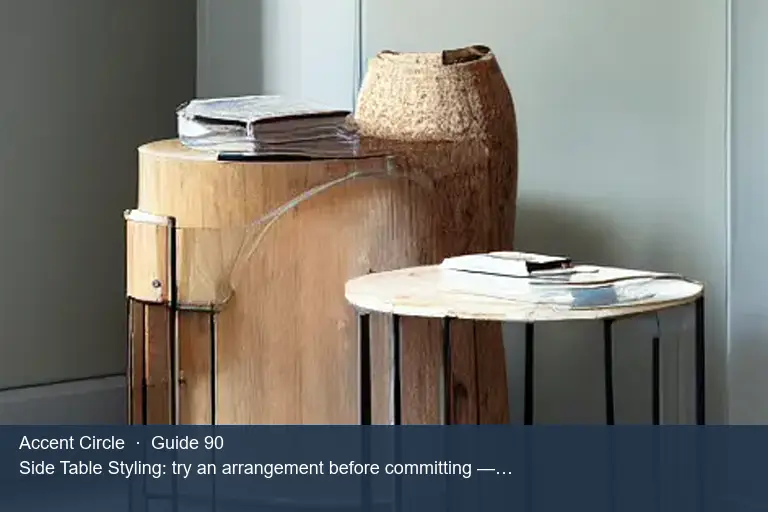
Side Table Styling: try an arrangement before committing — troubleshooting map for existing decor; setup in shared households
Side tables are a staple of our everyday lives, from kitchens to bedrooms. Whether you're looking to add a new side table or update an existing one, choosing the right one can significantly impact the ambiance of your space. In this article, we'll explore how to select the perfect side table for your home and how to create an organized and functional setting without compromising your comfort and style. We'll also discuss how to troubleshoot common issues, like mismatched dimensions or incorrect placement, to help you create a tailored arrangement that suits your needs and preferences.
Before you begin your side table design, it's crucial to consider the space you have in mind. The size and shape of your room will determine the size and type of side table you'll need. A large room might require a more compact table, while a small room could benefit from a larger one. Once you have the size in mind, you can then consider the style and function of your side table. The type of furniture you choose will depend on the size and shape of your room.
Once you've selected your side table, it's important to choose the right size and type of table. A table that is too small or too large for your space may not be functional. A table that is too small might not be practical for your needs, while a table that is too large could be uncomfortable to sit on. You should also consider the type of table that complements the rest of your furniture.
Choosing the right dimensions for your table is also crucial. The size of your table should be compatible with the rest of your furniture, and should also allow for easy movement. A table that is too small or too large can be challenging to move around, making it difficult to create an organized and functional setting.
Now that you've selected your side table, it's time to create an organized and functional setting without compromising your comfort and style. To do this, you should first arrange your furniture. This will help you create a sense of order and flow, making it easier to navigate the space. Once you've arranged your furniture, you can then add your side table. It's important to choose a table that is in line with the rest of your furniture, and that complements the rest of your furniture.
When it comes to adding your side table, you should first consider how you want to use it. Is it a small dining table or a larger one? Is it for guests or just you? Once you've decided on the purpose, you can then choose the right type of table for your needs. For example, a small dining table might be a good choice for a family gathering, while a larger table might be better for a larger event.
Once you've chosen your table, it's time to position it in the space. Positioning your table in the space will help you create a sense of order and flow, making it easier to navigate the space. A table that is too close to the wall or not in line with the rest of your furniture can be challenging to use, making it difficult to create an organized and functional setting.
Now that you've selected your table, it's time to add your table to the space. Adding your table to the space will help you create a sense of order and flow, making it easier to navigate the space. You should position your table in the center of the space, ensuring that it's not too close to the wall or not in line with the rest of your furniture, making it easier to create an organized and functional setting.
In conclusion, side tables are a great way to add a new dimension to your space. By considering the space you have in mind, selecting the right size and type of table, arranging your furniture, choosing the right type of table for your needs, and positioning your table in the space, you can create a sense of order and flow, making it easier to navigate the space. By following these steps, you can create an organized and functional setting without compromising your comfort and style.