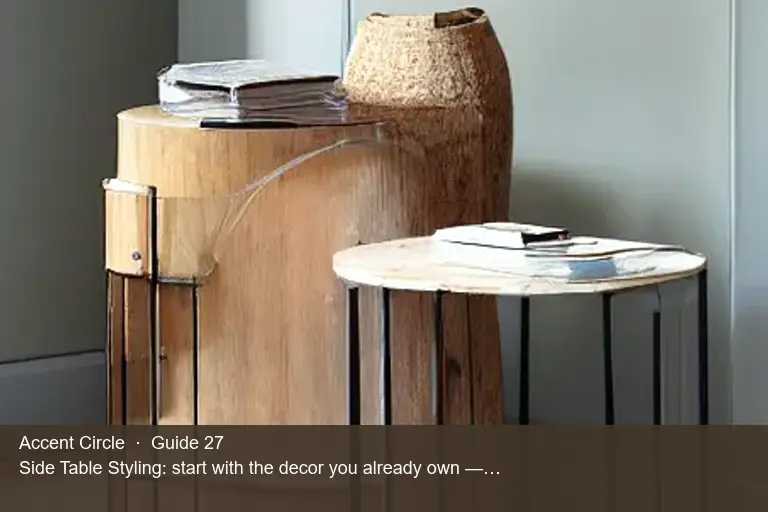
Side Table Styling: start with the decor you already own — resource budget for a short styling session; setup in shared households
Side tables are a versatile tool for enhancing the aesthetic appeal of your living spaces. Whether you're looking to add a touch of sophistication to a small room or want to make the space feel more relaxed, side tables can be a great addition. In this guide, we'll explore the practical tasks you can complete when setting up the side table, using a resource budget to ensure your decor is used efficiently.
### Step 1: Select the Right Side Table When selecting a side table, consider the size and the space it will occupy in your room. Side tables can be found in various styles, from modern to rustic, and from traditional to contemporary. Opt for a table that complements the existing decor, whether it's a minimalist design, a vintage accent or a contemporary style. This step ensures that your decor is not only visually appealing but also functional.
### Step 2: Choose the Right Material The material of your side table is crucial. Different materials have different characteristics and are suitable for different types of decor. For example, a piece of wood will look great in a rustic or traditional setting, while a metal can add a modern twist. Think about the style of your space and how the table will best complement it. This step helps ensure that your decor is not only functional but also visually appealing.
### Step 3: Decide on the Size and Type The size and type of your side table are important for accessibility and comfort. A small side table can be used in a small room, but a larger table will be ideal in a larger space. Consider the space you have and how it will be used throughout the day. This step ensures that your decor is not only functional but also comfortable to use.
### Step 4: Consider the Lighting Lighting is essential for a side table. Consider the style of your space and how the table will be used throughout the day. A side table can be used in the morning or as a nightstand, so choose a table that complements the style of your space. This step ensures that your decor is not only functional but also comfortable and aesthetically pleasing.
### Step 5: Install the Side Table Once you've selected all the other elements of your side table, it's time to install it. This step ensures that your decor is not only functional but also aesthetically pleasing. Make sure to follow the instructions for installation carefully to ensure a secure and secure installation.
### Step 6: Add Accessories A side table is not complete without accessories. Consider adding a few pieces of decorative items such as a vase, a plant, or a piece of artwork. This step ensures that your decor is not only functional but also visually appealing.
### Step 7: Finish the Side Table Once all the elements of your side table are installed and the accessories have been added, it's time to finish the table.
### Conclusion In a short styling session, you can use a resource budget to ensure that your decor is not only functional but also visually appealing. Select the right side table, choose the right material, decide on the size and type, consider the lighting, install the side table, add accessories, and finish the table.