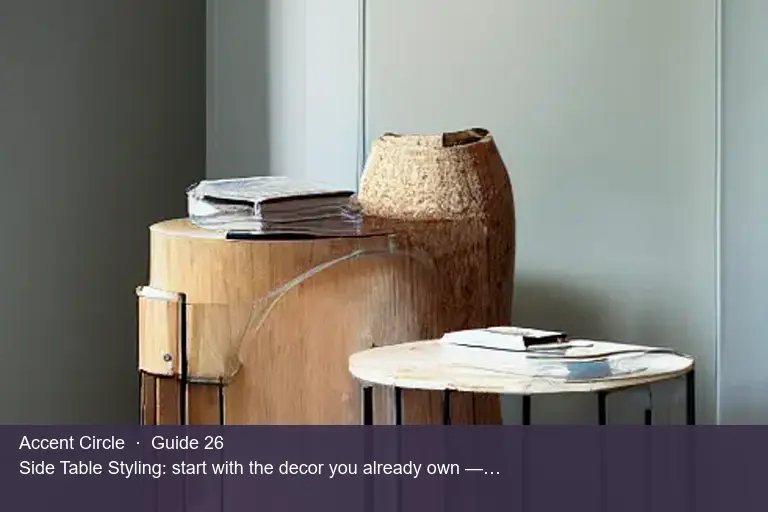
Side Table Styling: start with the decor you already own — setup audit for a shared room; setup in shared households
Side tables are a staple of any home, whether you're living in a single-family home or in a multi-family unit. While you can customize the look of your side table, it’s a good idea to start with the decor you already own. This article will help you create a functional, stylish, and comfortable side table for your shared household.
Setting up a side table in a shared household is a great way to create a welcoming space for guests. The first step is to decide on the size and style of your side table. A 24-inch or 36-inch side table is a great choice for a shared room as it can accommodate guests comfortably. Consider the color scheme that will complement the decor of your room and the style of the furniture in your shared household. For example, a modern and minimalist style might be best for a shared room where guests will be staying for a longer period of time.
Once you’ve decided on the size and style of your side table, the next step is to select the appropriate color and materials. The color of your side table should be a neutral color that complements the decor of your room. For example, a white or beige color might work well for a shared room where the decor is light and airy. The materials you choose should be durable and suitable for the type of furniture you are using. For example, a wood table or a metal table might be a good choice for a shared room where guests will be staying for a longer period of time.
Once you’ve selected the color and materials for your side table, the next step is to purchase the necessary components. You will need to purchase the side table and the base, as well as any additional components you need. For example, you will need to purchase a wooden or metal base, as well as additional components such as a drawer, a shelf, or a lamp. Once you have purchased the necessary components, it’s a good idea to measure the space you plan to use the side table in. This will help you determine the size and placement of the components, as well as any other furniture you may need.
The next step is to assemble the components in your shared household. Once you have assembled the components, it’s a good idea to check the fit and fit of the components. If you notice any gaps or notches, it’s a good idea to reassemble the components and check again.
Once you’ve assembled the components, it’s a good idea to test the side table in your shared household. The first step is to place the side table in a suitable location. For example, you could place the side table on a table, a shelf, or a wall. The next step is to test the side table to see if it can hold the items you plan to use. For example, you could test the side table to see if it can hold a coffee mug, a book, or a vase. If you test the side table, you can make adjustments and improve the fit and fit of the components.
Once you’ve tested the side table in your shared household, it’s a good idea to place it in the space where guests will be staying. The next step is to place the side table in the space where guests will be staying. The next step is to test the side table again to see if it can hold the items you plan to use. For example, you could test the side table again to see if it can hold a coffee mug, a book, or a vase.
In the end, creating a side table that is functional, stylish, and comfortable is a great way to start with the decor you already own. By selecting the right size and style for your side table, purchasing the necessary components, assembling the components in your shared household, testing the side table in your shared household, and placing the side table in your shared household, you can create a welcoming space for guests.