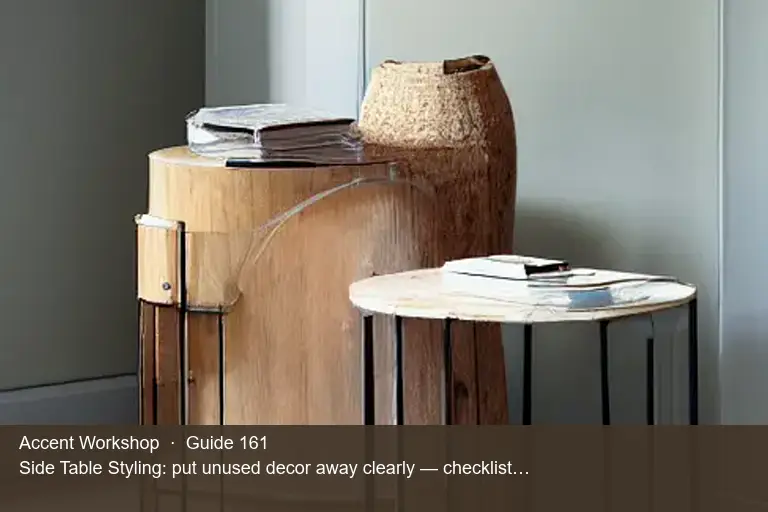
Side Table Styling: put unused decor away clearly — checklist for a first display plan; setup for a weekend project
When managing an empty side table, the first step in side table styling is to understand the purpose and style of the table. For a first display plan, this might mean arranging the table in a way that can be easily moved around, such as in a living room or dining area. Here is a checklist to help you arrange the table in a clear and functional way:
- Measure the dimensions of the side table to ensure it can be easily moved. This will help you determine how much space will be required and how long the table needs to be displayed.
- Choose a color scheme that complements the room's furniture and decor. For example, you might choose a neutral color like white or light grey to create a cohesive look. Consider the color scheme of your room when deciding on the table color.
- Decide on the type of furniture you want to display the table with. For example, you might choose a sofa, armchair, or a small table. Consider the size of the table when deciding on its purpose.
- Determine the size and placement of the table. For example, you might decide to place the table in the corner or near a window. Consider the location of your furniture when deciding on the table's position.
- Arrange the furniture in the desired order. For example, you might want the table to be in the middle, the sofa to be on the right, and the armchair to be on the left.
- Decide on the style of the table. For example, you might choose a modern or minimalist style to create a clean and modern look. Consider the style of your room when deciding on the table's style.
- Ensure the table is clean and tidy. For example, you might consider using a paintbrush to clean the table or using a vacuum cleaner to remove any dust or debris.
- Arrange the furniture in the desired order. For example, you might want the sofa to be on the right, the armchair to be on the left, and the table to be in the middle.
- Label the furniture and table. Consider using labels or sticky notes to keep track of the furniture and table.
- Choose a display plan that can be easily moved around. For example, you might choose a display plan that is in a living room or dining area. Consider the location of your furniture when deciding on the display plan.
By following these steps, you can arrange the side table in a clear and functional way that will make a first display plan easier and more enjoyable.
Use this guide