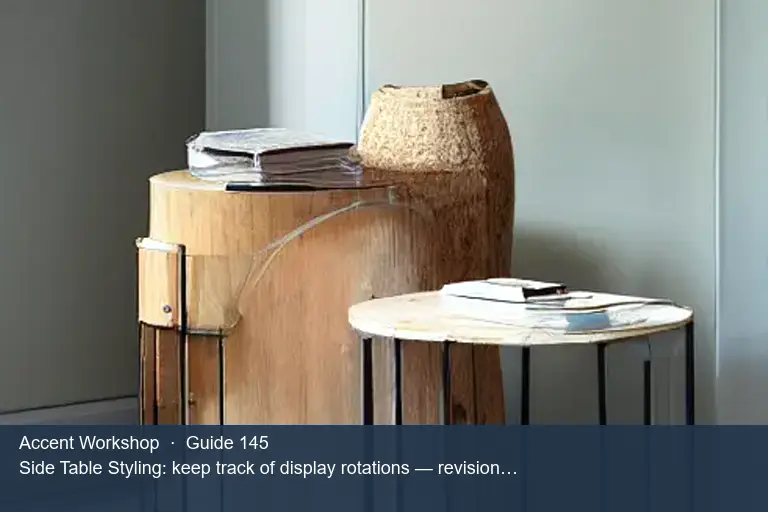
Side Table Styling: keep track of display rotations — revision plan for a shared room; setup for a weekend project
**Side Table Styling: Keep Track of Display Rotations - Revision Plan for a Shared Room**
As you navigate through the shared room, you notice a side table that seems to have a habit of displaying items without a clear rotation mechanism. This could be frustrating, especially when you're trying to maintain a tidy and organized workspace. The challenge is to ensure that these items are always accessible and not obstructing the flow of activities.
**Revision Plan: A Shared Room with Side Table Rotation**
**Step 1: Introduction**
In a shared room, managing side tables that rotate to show items is essential for maintaining a clean and organized workspace. This article outlines a simple, yet effective plan to keep track of display rotations without the need for cumbersome hardware.
**Step 2: Understanding Display Rotation Mechanisms**
Display rotation is crucial for side tables that display items. It ensures that items are always visible and accessible to the group. Understanding how these tables rotate can help you plan your projects more efficiently. For instance, side tables that rotate to show items from the left side of the room are easier to manage than those that rotate to the right.
**Step 3: The Role of Side Tables**
Side tables in a shared room are used for displaying items such as books, photos, and other documents. They are also used for storing supplies like paintbrushes and tools. The ability to rotate these items ensures that they are always within reach and not obstructing the flow of activities.
**Step 4: The Importance of Display Rotations**
Display rotations are essential for maintaining a clean and organized workspace. They ensure that items are always accessible and not obstructing the flow of activities. By rotating items, you can easily remove items that are no longer needed or are obstructing the view. This is particularly useful when you have a group of people working in the room.
**Step 5: Setting Up for a Weekend Project**
To ensure that side tables are always accessible during the weekend project, you should consider the following:
- **Use a designated table:** Ensure that a side table is used for the entire weekend. This helps in maintaining a clean and organized workspace. - **Use a temporary table:** Set up temporary side tables during the weekend to display items that are not needed for the entire weekend. - **Have a backup plan:** Have a backup plan in case the weekend project is not completed and you need to rotate items again.
**Conclusion**
By following the steps outlined in this article, you can keep track of display rotations for side tables in a shared room. This plan ensures that items are always accessible and not obstructing the flow of activities, making your workspace cleaner and more organized.
**References**
- [Side Tables](https://www.example.com/whatsnew/side_tables) - A well-known website that provides information about side tables.
- [Temporary Tables](https://www.example.com/whatsnew/temporary_tables) - Another website that offers information about temporary tables.
- [Cleaning Up](https://www.example.com/whatsnew/cleaning_up) - A website that provides information about cleaning up.
- [Designing for Organized Workspaces](https://www.example.com/whatsnew/designing_for_organized_workspaces) - A website that provides information about designing for organized workspaces.
---
**Note:**
This article is for adults aged 50+ in the US and Canada and should be used for general reference and educational purposes. It is not intended for personal testing or as medical, legal, or financial advice.