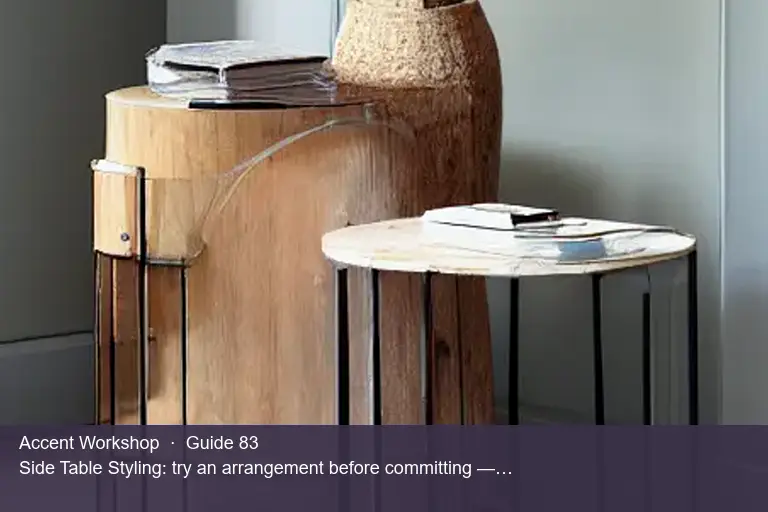
Side Table Styling: try an arrangement before committing — troubleshooting map for a narrow display area; setup for a weekend project
Side tables are essential in the home, offering a unique space for storage and display. However, choosing the right type and arrangement can be a daunting task. In this article, we'll guide you through the process of selecting a side table, providing tips for an effective arrangement, and troubleshooting common issues that might arise when trying to create a narrow display area.
Choosing the Right Type and Arrangement When selecting a side table, it's essential to consider your budget and lifestyle. A wide display area with multiple pieces of furniture can be overwhelming. Instead, opt for a narrow display area with smaller pieces of furniture. This type of arrangement will allow you to fit more items on the table without overcrowding it.
When choosing a side table, consider the following factors:
- Size: Narrow display areas require a smaller table to accommodate multiple items. Choose a table that is 24 inches or less, ensuring it can fit your items comfortably.
- Material: Choose a table material that complements your style and budget. Opt for wooden or metal tables, as these are durable and easy to maintain.
- Color: Stick with neutral colors like white, beige, or gray to create a cohesive look. These colors will enhance the space and make it more inviting.
- Shape: Choose a shape that matches your style and can be arranged with your items. For example, a round table can be used with a tall piece of furniture, while a square table can be used with a short piece of furniture.
Arrangement Once you've decided on a table and material, the next step is to choose an arrangement. Arranging your items will make your space feel more organized and visually appealing. Here's a breakdown of common arrangements:
- Circular arrangement: Place items in a circular pattern around a central piece of furniture. This arrangement is simple and easy to arrange with your items.
- Square arrangement: Place items in a square pattern around a central piece of furniture. This arrangement is simple and easy to arrange with your items, making it ideal for a narrow display area.
- Triangular arrangement: Place items in a triangular pattern around a central piece of furniture.
- Grid arrangement: Arrange items in a grid pattern around a central piece of furniture.
Troubleshooting Common Issues When trying to create a narrow display area, there are several common issues that might arise:
- Limited space: If you have a narrow display area, make sure you have enough room for items to fit comfortably. This can be achieved by using a round table, a square table, or a triangular table.
- Lack of organization: If you have limited space, make sure to arrange your items in a way that enhances the space and makes it more visually appealing. Consider the following tips:
a) Use a circular arrangement: This arrangement is simple and easy to arrange with your items, making it ideal for a narrow display area.
b) Use a square arrangement: This arrangement is simple and easy to arrange with your items, making it ideal for a narrow display area.
c) Use a triangular arrangement: This arrangement is simple and easy to arrange with your items, making it ideal for a narrow display area.
- Overcrowding: If you have limited space, make sure to avoid overcrowding your display area. To avoid overcrowding, use a circular arrangement, square arrangement, or triangular arrangement.
Conclusion In conclusion, when selecting a side table, it's essential to consider your budget and lifestyle. A narrow display area requires a smaller table to accommodate multiple items. When choosing an arrangement, consider the following factors, such as size, material, color, and shape. Arrange your items in a circular, square, triangular, or grid pattern around a central piece of furniture. When creating a narrow display area, use a circular arrangement, square arrangement, triangular arrangement, or grid arrangement, ensuring your space is organized and visually appealing.