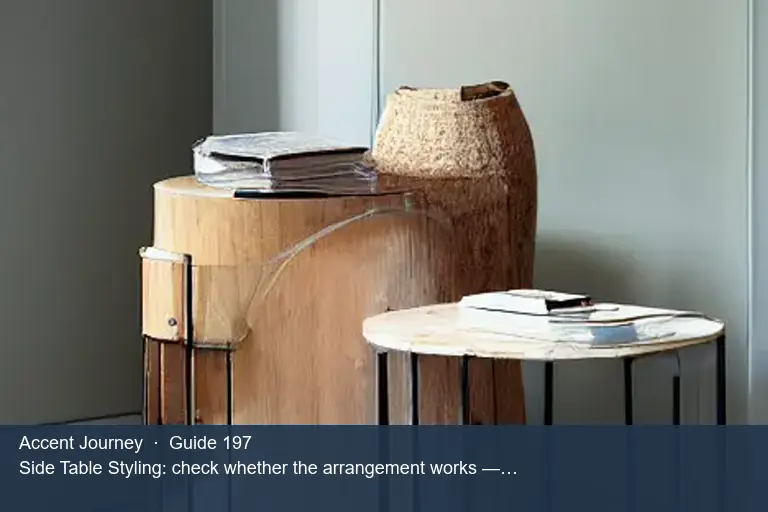
Side Table Styling: check whether the arrangement works — decision tree for a temporary arrangement; setup for independent projects
**Side Table Styling: Check the Arrangement Works for Temporary Arrangement**
**Introduction**
As you navigate through the busy day, a side table becomes a focal point in your home. Its placement can significantly affect the ambiance and functionality of your space. In this article, we will explore a practical approach to ensure that your side table looks both aesthetically pleasing and functional. We will also offer a decision tree for your temporary arrangement, which can help you make informed decisions on whether the arrangement works.
**Step 1: Check the Layout and Position of the Table**
The first step in any temporary arrangement is to assess the layout and position of the table. Ensure that it is placed in a way that maximizes visibility and minimizes clutter. If the table is too close to the walls, it will obscure the view of the other furniture, reducing its practicality. On the other hand, if the table is placed too far away, it may not provide enough space for other items to be placed, such as a bookshelf or a book. By considering the layout and positioning, you can ensure that the table is placed in a way that enhances its functionality while still looking aesthetically pleasing.
**Step 2: Decide on the Type of Furniture and Accessories**
Next, decide on the type of furniture and accessories you will be using for your temporary arrangement. Consider the purpose of the table and the items you plan to use it for. For example, if you plan to use a coffee table, you may want to consider adding a coffee table, a bookshelf, or a book. If you plan to use a sofa, you may want to consider adding a sofa, a book, or a bookshelf. By selecting the right furniture and accessories, you can ensure that the arrangement is functional and visually appealing.
**Step 3: Choose the Colors and Patterns**
Once you have decided on the furniture and accessories, choose the colors and patterns for the arrangement. The color scheme should be cohesive and visually appealing, while the patterns should complement the colors and add a touch of texture to the space. For example, if you plan to use a sofa, a book, and a bookshelf, you may want to choose a color scheme that complements the sofa and the book, while adding a pattern that complements the book and the bookshelf. By choosing the right colors and patterns, you can ensure that the arrangement is functional and visually appealing.
**Step 4: Apply the Final Touches**
Finally, apply the final touches to the arrangement. The final touches can include the table, the accessories, and the final touches on the arrangement. Make sure that the table is placed in a way that enhances its functionality while still looking aesthetically pleasing. Ensure that the accessories complement the colors and patterns, and that the final touches are minimalistic and functional. By applying the final touches, you can ensure that the arrangement is functional and visually appealing.
**Conclusion**
In conclusion, a side table styling can be a useful tool for making temporary arrangements. By checking the layout and position of the table, deciding on the type of furniture and accessories, choosing the colors and patterns, and applying the final touches, you can ensure that the arrangement is functional and visually appealing. By following these steps, you can help ensure that your temporary arrangement works and looks both aesthetically pleasing and functional.