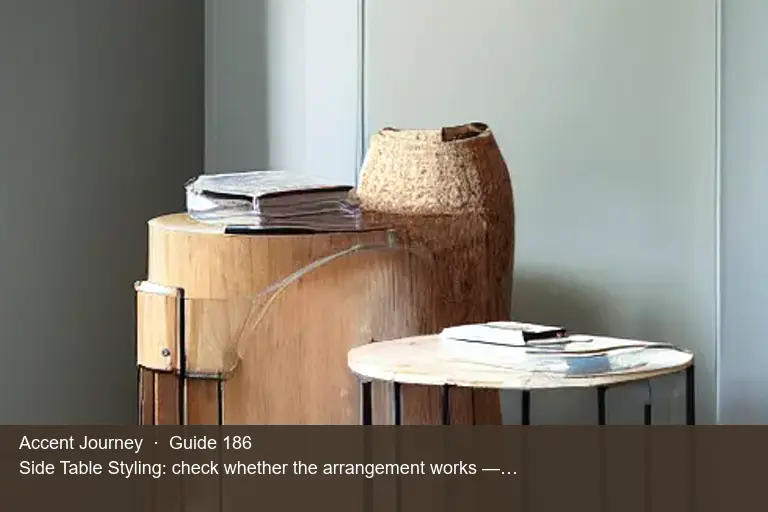
Side Table Styling: check whether the arrangement works — handover notes for a shared room; setup for independent projects
Side tables are a crucial piece of furniture in most shared rooms, providing a comfortable place to sit while enjoying meals or watching movies. However, their proper arrangement can make or break your space. To ensure that your side table styling works, it’s important to check the following points:
- Position and layout: The placement of the side table should be in a central location within the room. This is because it acts as a focal point and is the primary place for guests to sit and entertain themselves. The layout should be easily accessible for guests to use, with space for additional seating if necessary.
- Width and height: The size of the side table should be appropriate for the number of guests in the room. A small table will not accommodate many guests, while a large table will not provide enough space for many to sit comfortably.
- Color: The color of the side table should match the theme of the room or complement the other furniture in the space. This will create a cohesive look and feel, making it easy for guests to identify and enjoy the room together.
- Material: The material of the side table should be chosen to complement the overall color scheme and the decor of the room. For example, a wooden table can be used to match a neutral color scheme, while a metal table can be used to match a bright color scheme.
- Lighting: The placement and brightness of the lights should be thoughtfully considered. If the room is already well-lit, the lighting should be minimal, and the table should be placed on a low table or under a lamp. If the room is dimly lit, the table should be placed on a high table or under a lamp.
- Accessories: The side table should have appropriate accessories such as a tablecloth, a napkin, and a beverage tray. These items should be arranged neatly and in a way that complements the overall decor of the room.
- Noise: If the side table is a noisy one, it may disturb the guests. Consider the noise level of the room and choose a table that is appropriate for the noise level. If the room is quiet, a tablecloth or napkin may be sufficient.
- Size and space: The side table should be large enough for the number of guests. If the room is small, the table should be large enough to accommodate a small number of guests. If the room is large, the table should be large enough to accommodate a larger number of guests.
- Maintenance: The table should be regularly cleaned and maintained to keep it in good condition. This will ensure that your room looks and feels great and that guests have a pleasant experience.
To ensure that your side table styling works for your shared room, it's important to check the above points. If you find that the arrangement does not work, you should consider making any necessary adjustments. For example, if the side table is too small or too large, you should consider making it larger or smaller. If the table is not high enough, you should consider placing it on a low table. If the table is too noisy, you should consider adding noise-cancelling accessories.
In conclusion, the proper arrangement of your side table can make or break your space. By checking the above points, you can ensure that your side table styling works for your shared room and makes the most of your space.