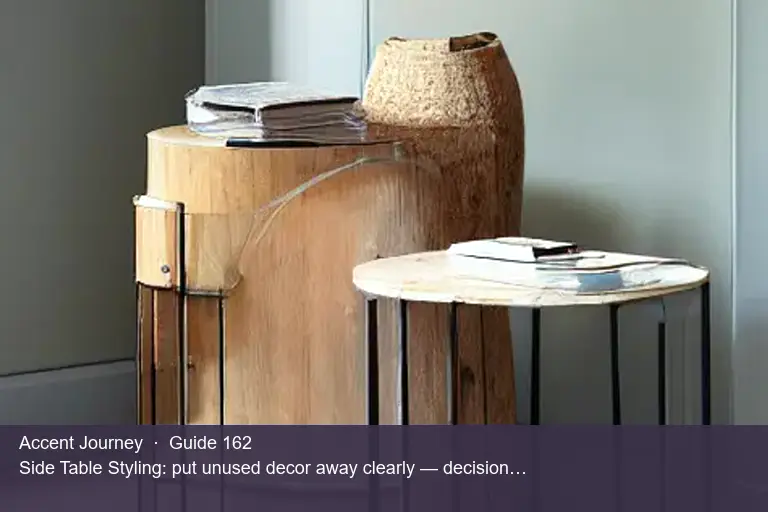
Side Table Styling: put unused decor away clearly — decision tree for a first display plan; setup for independent projects
When deciding on the best way to display your side table, it's important to consider the aesthetics and utility of your decor while ensuring it doesn't take up valuable space. A side table is a versatile piece of furniture that can be used for a variety of purposes, from display to storage. By putting unused decor aside, you can create a fresh and elegant look that reflects your personal style and the space you've allocated to your table. Here’s a step-by-step decision tree for a first display plan, focusing on the practical aspects of side table styling:
- **Evaluate Your Side Table Needs**: Before you start decorating, assess how your side table will be used. Are you planning to display a collection of items, display artwork, or store a collection of items? Understanding your specific needs will help you choose the right decor to fit the space and your objectives.
- **Decide on the Placement of Decor**: Depending on the purpose of your side table, decide where you want to place your decorative elements. For example, if you’re planning to display a collection of items, consider placing them near the back or side of the table. If you’re planning to display artwork, place it near the front or side of the table. If you’re planning to store a collection of items, place the decor near the front or back of the table.
- **Consider the Style and Color of Your Decor**: Choose a style and color of your decorative elements that match the space and the purpose of your side table. This will help create a cohesive look that enhances the overall aesthetic of your display.
- **Select the Decor for Your Side Table**: Select decor items that complement the space and the purpose of your side table. For example, if you’re planning to display a collection of items, select items that are similar in color and style to the items on display. If you’re planning to display artwork, select items that are similar in style and color to the artwork. If you’re planning to store a collection of items, select items that are similar in style and color to the items on display.
- **Create a Layout Plan**: Once you’ve chosen your decor, create a layout plan that will guide you through the process of placing your decorative elements. Start with the back of the table, then move to the front, and finally to the front or back of the table. This will help you create a logical flow that enhances the appearance of your side table.
- **Plan for Storage**: If your side table is to store a collection of items, plan for a system that will allow you to easily access your items without cluttering the space. This can include using shelves, baskets, or other storage solutions.
- **Select the Right Shelving System**: Select a shelving system that will be suitable for the space and the purpose of your side table. This can include using shelves or baskets, or using a combination of shelves and baskets. Consider the size of your items and the space you have available to determine the best shelving system for your needs.
- **Plan for Display**: Once you’ve created your layout plan, plan for display by arranging your items in the way that best suits your purpose. This can include using a display shelf or a display basket to display your items.
By following these steps, you can create a side table display plan that is both functional and aesthetically pleasing. Remember to take into account your personal style and the space you've allocated to your table to ensure that your decorative elements fit seamlessly with the space and the purpose of your side table.