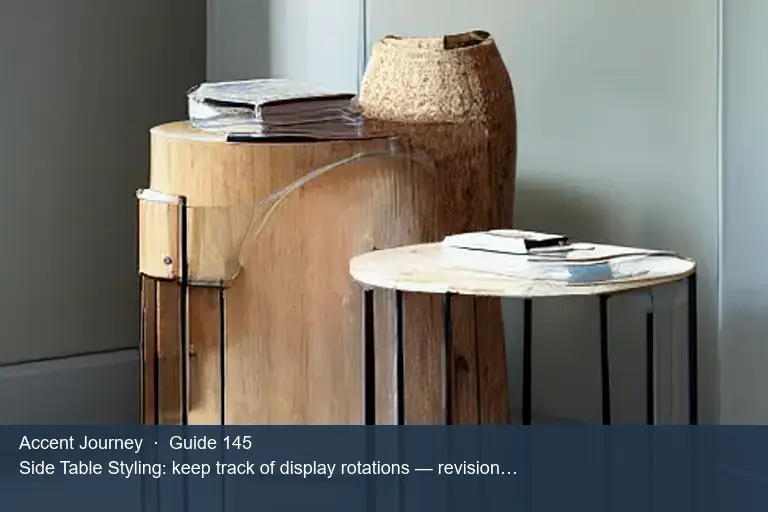
Side Table Styling: keep track of display rotations — revision plan for a shared room; setup for independent projects
Title: Side Table Styling: keep track of display rotations — revision plan for a shared room; setup for independent projects
Stylish side tables in a shared living space can be a great way to enhance the aesthetic appeal of any room, but maintaining a track of display rotations is essential for ensuring that the furniture remains tidy and aesthetically pleasing. This article offers a practical approach to managing side tables in a shared living space, providing a revision plan for an independent project and setting up for an independent project.
Step 1: Identify the need for display rotations First, identify the need for display rotations in your shared living space. Determine where you want to keep the side tables, and consider the quantity of display items you will need. For example, if you have a large living room with a minimum of six display tables, you might want to keep the tables in a central location where everyone can easily access them.
Step 2: Establish the criteria for display rotations Establish the criteria for display rotations. Determine the number of display items you need to keep, the location where they will be placed, and the frequency of rotation. For example, if you keep six display items in a central location, you might rotate them every three months.
Step 3: Plan the installation of side tables Plan the installation of side tables. Determine the location of the side tables, the quantity needed, and the frequency of rotation. For example, if you have a central location for six display tables, you might install them in a central location every three months.
Step 4: Organize display items Organize display items. Use a tool such as a table organizer or a storage basket to keep display items organized. This will help prevent clutter and ensure that the furniture remains tidy.
Step 5: Maintain display rotations Maintain display rotations. Monitor the frequency of display rotations to ensure that the furniture remains tidy. If you notice that display items are not being rotated regularly, consider rotating them more frequently.
Step 6: Establish a maintenance schedule Establish a maintenance schedule for the side tables. Determine the frequency of maintenance and the tools to be used for each maintenance. For example, if you rotate display items every three months and use a table organizer to keep them organized, you might maintain them every three months with a table organizer.
Step 7: Consider the long-term maintenance of side tables Consider the long-term maintenance of side tables. Determine the maintenance schedule and the tools to be used for each maintenance.
Step 8: Review display rotations regularly Review display rotations regularly. Regularly review the display rotations to ensure that the furniture remains tidy and aesthetically pleasing.
Step 9: Maintain display rotations over time Maintain display rotations over time. Over time, the frequency of rotation may change.
Step 10: Consider the impact of display rotations Consider the impact of display rotations on the aesthetics of the shared living space. Consider the impact of display rotations on the aesthetics of the shared living space. For example, if display items are not being rotated, it may affect the overall aesthetic appeal of the shared living space.
Step 11: Review display rotations for future maintenance Review display rotations for future maintenance. Review the display rotations for future maintenance to ensure that the furniture remains tidy and aesthetically pleasing. If you notice that display items are not being rotated, consider rotating them more frequently.
Conclusion: By following the above steps, you can effectively manage side tables in a shared living space, ensuring that the furniture remains tidy and aesthetically pleasing over time. By maintaining display rotations regularly, you can also ensure that the furniture remains tidy and aesthetically pleasing over time, making it a great way to enhance the aesthetic appeal of any room and keep the furniture in a central location where everyone can easily access it.