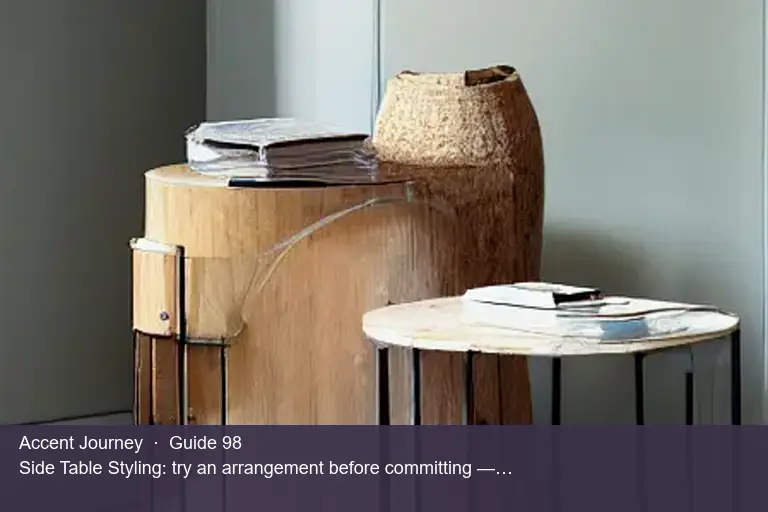
Side Table Styling: try an arrangement before committing — preparation guide for a temporary arrangement; setup for independent projects
**Side Table Styling: Try an Arrangement Before Commitment**
The side table is a crucial piece of furniture that not only serves as a focal point but also acts as a functional piece of decor. When it comes to side tables, there's an infinite variety of styles and arrangements to choose from. Whether you're looking to add a new dimension to your living space or simply want to refresh your existing arrangements, understanding how to arrange a side table can be a game-changer. In this article, we’ll take a step-by-step look at how to create an effective side table arrangement, focusing on the practical task of selecting the right combination of elements.
**Introduction**
When selecting a side table, the first thing you need to consider is whether you want a traditional, contemporary, or rustic style. Traditional side tables are typically made of wood and often have a curved top to create a unique aesthetic. Contemporary side tables are made of more durable materials such as metal and often have a sleek, modern look. Rusted side tables are made of wood and are often used as focal points in homes with a rustic feel.
**Understanding Side Tables**
Side tables are not just decorative items; they are functional pieces of furniture that serve multiple functions. They provide a space for various activities such as reading, crafting, or dining. Understanding how to arrange a side table can help you maximize its potential and ensure your living space is well-organized.
**The Right Angle**
When arranging a side table, the right angle is the most important factor. A side table with a right angle is ideal because it provides an open and free-flowing space. This is ideal for a dining area or a living room where you want to create a lively atmosphere. The right angle also makes it easier to adjust the height of the table to accommodate different sizes of guests.
**Selecting the Right Elements**
When it comes to selecting the right elements, you need to consider the overall shape of the room and the style of the furniture you're arranging. For instance, a traditional side table would be a good choice if you're in a modern or minimalist style, while a rustic side table might work well in a rustic or country style. You should also consider the size and shape of the table and the space it occupies.
**The Right Material**
The right material for a side table is equally important. For instance, wood is a great choice for a rustic or country style table because it provides a natural and warm feel. Metal can be used for a modern or contemporary style table because it provides durability and a sleek, modern look.
**The Right Layout**
The right layout is another crucial factor. The right layout will help you create a comfortable and organized space. A side table with a right angle and a right material will provide a free-flowing space, making it easy to move around and create a lively atmosphere. The right layout will also help you create a space that is functional and not cluttered.
**The Right Size**
The right size of a side table is also important. For instance, a side table with a right angle and a right material will provide a free-flowing space, making it easy to move around and create a lively atmosphere. The right size of a side table will also help you create a space that is functional and not cluttered.
**Conclusion**
In conclusion, when it comes to arranging a side table, the right angle, right material, right layout, and right size are all important factors to consider. By selecting the right elements, the right material, the right layout, and the right size, you can create a functional and comfortable space that will make a positive impact on your living space.