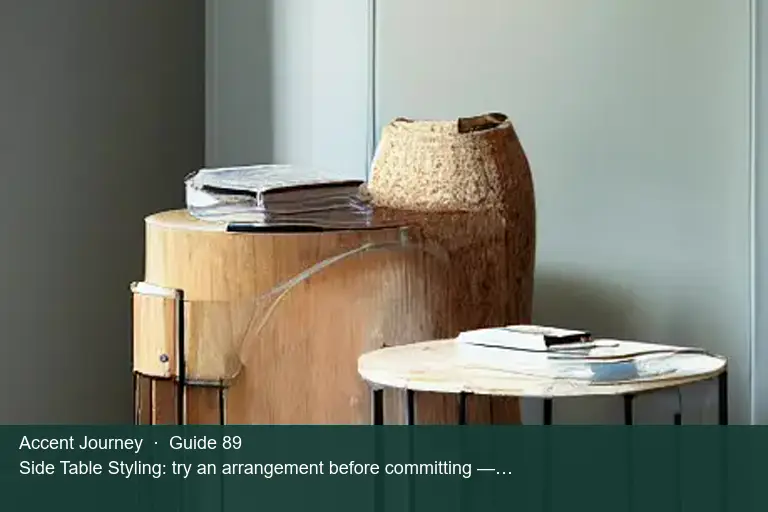
Side Table Styling: try an arrangement before committing — handover notes for existing decor; setup for independent projects
Side table styling: try an arrangement before committing - handover notes for existing decor; setup for independent projects
For many homeowners, side tables are a crucial element of their home decor. But deciding where to put them can be challenging. Choosing the right side table is not just about aesthetics; it's about functionality, style, and space management. In this article, we'll explore a few practical tips to help you choose the right side table for your space.
- Assess your space: before deciding on a side table, you should first understand your space. Consider the size of your room, your budget, your preferred style, and the decor you already have. This will help you determine whether a side table will serve your needs and fit your budget.
- Choose your style: side tables come in a variety of styles, including contemporary, rustic, industrial, and modern. Each style has its own unique features and purposes. For example, a contemporary style would be ideal for a modern or minimalist space, while an industrial style would be suitable for an older or industrial space. Consider your style preferences and the purpose you need the table for before choosing a style.
- Decide your size: side tables come in different sizes, from small to large. Consider the size of your room and your space needs to make sure you select a size that suits your space. A small side table would be ideal for a small space, while a large one would be suitable for a large space.
- Consider your budget: side tables can cost anywhere from $50 to $1,000 or more, depending on the style, size, and materials used. Consider your budget and make sure you can afford the cost before committing. A small side table might be within your budget, but a large one might not.
- Choose your materials: side tables come in various materials, including wood, metal, glass, and plastic. Each material has its own unique properties and is suitable for different purposes. For example, wood is durable and can be stained, while metal is more durable and can be polished. Choose materials that suit your needs and space.
- Decide the space: side tables can be placed in various places, from the center of your room to the corner. Consider the space you need to maximize the use of the space and the space you have. Place the table in a location that will work best for your space and maximize the use of the space.
- Set the stage: before choosing a side table, you should set the stage. Consider your style, size, materials, and space to ensure the table fits the space and the style. If the table doesn't fit the space or the style, you may need to make adjustments before committing.
In conclusion, choosing the right side table is not just about aesthetics; it's about functionality, style, and space management. Consider your space, your style, your budget, and the materials you use. With the right tools and a bit of creativity, you can choose a side table that fits your needs and space.