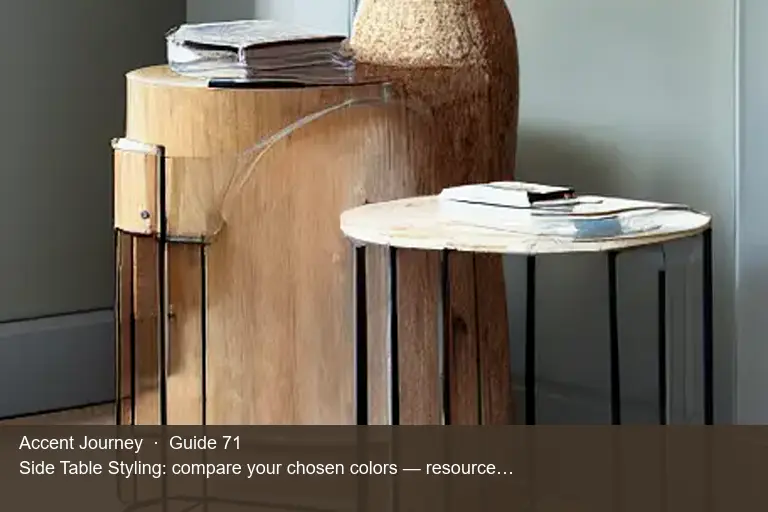
Side Table Styling: compare your chosen colors — resource budget for mixed item sizes; setup for independent projects
Side tables are an essential piece of furniture in any room. Whether you’re looking to create a chic, modern look or a traditional, cozy atmosphere, side tables can make all the difference. With so many options available, choosing the right color can be a daunting task. But fear not! This article will help you compare your chosen colors for side table styling, giving you a clear understanding of the best color combinations for mixed item sizes. Additionally, we’ll provide a resource budget to help you make informed decisions, as well as a setup for independent projects to allow you to experiment with different color combinations. Let’s get started!
Choosing the right color for side tables is crucial. It’s important to consider the overall design of your room and the style you want to convey. For example, a modern, minimalist style may require a white or beige color, while a traditional, cozy style may prefer a dark wood color. It’s also important to consider the size of your room and the furniture you have available. For instance, if you have a small space, a more bold, bold color may work better, while a larger space may prefer a more subdued color. Additionally, the color of your side table should complement the other pieces in your room.
Let’s start by comparing your chosen colors for side table styling. To do this, we’ll use the color guide provided in the article. The color guide is divided into three sections: primary, secondary, and tertiary colors. Primary colors are the three most commonly used colors in design. Secondary colors are the colors that are complementary to the primary color. Tertiary colors are the colors that are neutral to the primary and secondary colors. To find the best color combination for your room, we’ll start by identifying the primary color(s) in your room. Then, we’ll consider the secondary colors that complement the primary color. Finally, we’ll look at the tertiary colors to ensure they complement the secondary colors. By doing this, we can create a cohesive look that fits your room and the style you want to convey.
Next, we’ll provide a resource budget to help you make informed decisions. The resource budget is a list of all the resources needed to create the side tables. This includes materials, tools, and any other necessary equipment. The budget is divided into sections for materials, tools, and equipment. Materials include wood, metal, and fabric. Tools include sandpaper, glue, and scissors. Equipment includes a saw, drill, and measuring tape. The budget is divided into sections for materials, tools, and equipment to help you make informed decisions.
Finally, we’ll provide a setup for independent projects. The setup is a guide for creating side tables in your own home. The setup includes instructions on how to build a side table, as well as any necessary tools and materials. The setup is divided into sections for building a side table, instructions, and materials. The instructions are divided into sections for building a side table, instructions, and materials. The materials include wood, metal, and fabric. The tools include sandpaper, glue, and scissors.
By following this article, you will have a clear understanding of the best color combinations for mixed item sizes. You will also have a resource budget to help you make informed decisions. And you will have a setup for independent projects to allow you to experiment with different color combinations. This will give you a powerful tool in your toolbox for creating beautiful side tables in your own home.