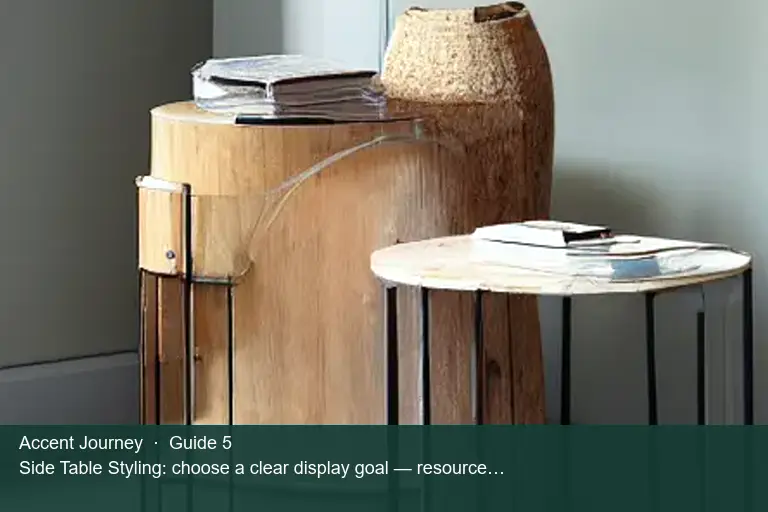
Side Table Styling: choose a clear display goal — resource budget for a shared room; setup for independent projects
Side tables have become a staple in many homes and public spaces, serving as essential furniture in the shared rooms. For independent projects, the right side table styling can significantly enhance the aesthetic appeal of the room, whether it's for a casual or a sophisticated setting. This article aims to help readers identify a clear display goal for side table styling, tailored to their needs and budget.
- **Identify Your Shared Room's Purpose**: Before choosing side table styling, consider the primary purpose of the shared room. Is it for relaxation, social gatherings, or work? Understanding the context helps in selecting a design that fits perfectly with the room's theme and function.
- **Research the Budget**: The budget plays a crucial role in deciding side table styling. For a shared room, a budget of $1,000-$2,000 might be sufficient for a few basic side tables. However, for a larger room or a more extravagant one, a broader budget might be necessary. This budget can be divided into two main categories: functional and decorative.
- **Choose Functional Side Tables**: Functional side tables are designed to serve a specific purpose. For a shared room, functional side tables could include a coffee table, a dining table, or a storage table. These tables are meant to support and enhance the room's functionality. For example, a coffee table can be used for relaxation, a dining table for social gatherings, or a storage table for keeping items organized.
- **Consider Decorative Side Tables**: Decorative side tables are designed to add to the room's ambiance and aesthetic. For a shared room, decorative side tables could include a lamp table, a bookshelf, or a vase table. These tables are meant to add a touch of personality and style to the room. For example, a lamp table can be used for a cozy ambiance, a bookshelf can be used for a collection of books, or a vase table can be used for a vase.
- **Budget Breakdown**: The budget breakdown can be divided into two main categories: functional and decorative.
- **Selecting the Right Size and Style**: When choosing side tables, select a size that fits the room's needs and the individual style preferences. For a shared room, a size of 4 feet high and 3 feet wide should be selected. The style of the side tables should be chosen based on the room's theme and the individual preference for aesthetics, functionality, or both.
- **Budgeting for Independent Projects**: For independent projects, the budget can be divided into two main categories: functional and decorative.
In conclusion, side table styling can enhance the aesthetic appeal of any shared room, whether it's for a casual or a sophisticated setting. The right display goal can be identified by considering the shared room's purpose, the budget available, and the individual preference for aesthetics, functionality, or both. By choosing side tables that fit perfectly with the room's theme and function, and considering the budget available, readers can confidently select the right side table styling for their independent projects.