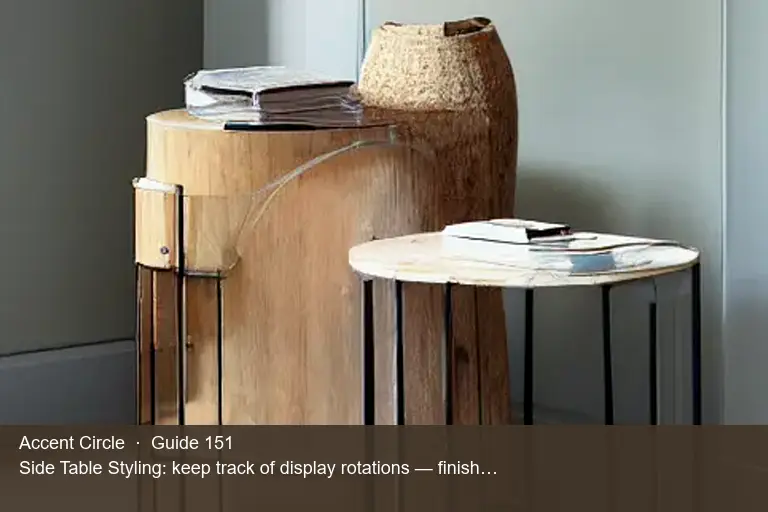
Side Table Styling: keep track of display rotations — finish criteria for mixed item sizes; setup in shared households
**Side Table Styling: Keeping Track of Display Rotations for Mixed Item Sizes**
In the realm of side tables, side tables are often the focal point of an entire room, whether it's a living space or a dining area. Their versatility and functionality make them a standout choice in any home. However, one aspect that can significantly impact the overall look and functionality of a side table is its display rotations, a crucial element for maintaining the room's aesthetics and usability. The task at hand is to help readers keep track of display rotations for side tables in shared households, ensuring that they are consistent and efficient in managing the items they display. This article aims to provide practical guidance on how to do this effectively.
**Understanding Display Rotations**
Display rotations refer to the arrangement of items within a side table. This can be seen as a way to visually organize and display items in a way that enhances the room's aesthetic appeal. For instance, a side table with items arranged in a way that resembles a chessboard can provide a balanced and visually appealing display. The goal is to ensure that the items are displayed in a way that allows the room to be easily navigated and aesthetically pleasing.
**Common Items for Side Tables**
When it comes to side tables, common items include items of various sizes and shapes. For example, small items like cups or small plates can be arranged in a way that resembles a chessboard, while larger items like dining chairs or tables can be arranged in a way that resembles a board game. The key is to ensure that the items are displayed in a way that maintains the room's aesthetic appeal while also allowing easy navigation.
**Setting Up in Shared-Household Plans**
To keep track of display rotations for side tables in shared household plans, it is essential to establish a clear plan. This plan should include the items that need to be displayed, the sizes and shapes of those items, and the display arrangements. For instance, if the household has a dining area, it may include items of various sizes and shapes like plates, bowls, and glasses. The items should be displayed in a way that maintains the room's aesthetic appeal and allows easy navigation.
**Consistent Display Rotations**
To ensure that display rotations are consistent, it is essential to maintain a consistent display arrangement for the items displayed. This can be achieved by using a consistent color scheme, a consistent shape, or a consistent size for each item. For instance, if the household has a dining area, the dining chairs should be displayed in a way that resembles a board game or a chessboard, while the plates should be displayed in a way that resembles a chessboard or a board game. The goal is to ensure that the items are displayed in a way that enhances the room's aesthetic appeal while also allowing easy navigation.
**Maintaining Consistency**
To maintain consistency in display rotations, it is essential to regularly review and update the display arrangements for the items displayed. This can be achieved by using a digital calendar or a spreadsheet to keep track of the display arrangements for the items displayed. The goal is to ensure that the items are displayed in a way that maintains the room's aesthetic appeal and allows easy navigation.
**Conclusion**
In conclusion, side tables can be a great addition to any room, but their display rotations can significantly impact the overall look and functionality of the room. By keeping track of display rotations for side tables in shared household plans, readers can ensure that their room is easily navigated and visually appealing. By establishing a clear plan and using a consistent display arrangement for the items displayed, readers can maintain consistency in display rotations and ensure that their room is maintained in a way that enhances the room's aesthetic appeal and allows easy navigation.