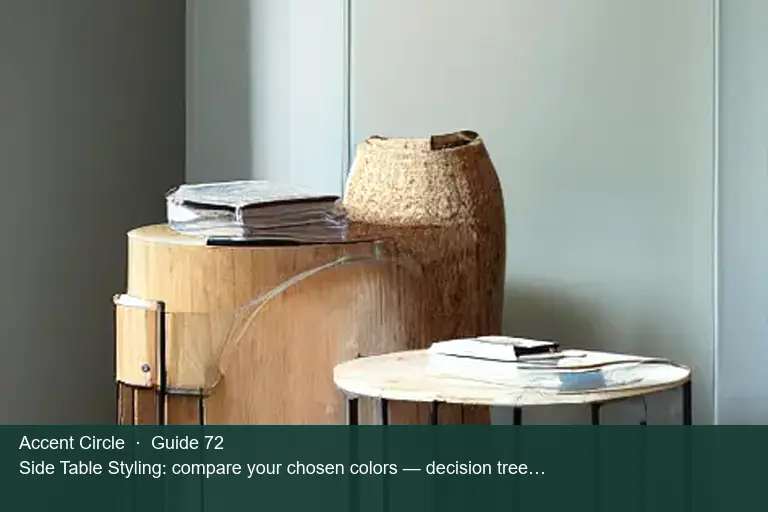
Side Table Styling: compare your chosen colors — decision tree for mixed item sizes; setup in shared households
Side tables are essential furniture pieces that serve as the focal point of a living space. However, the choice of color can greatly influence the atmosphere and aesthetic appeal of your space. In this guide, we'll explore the difference between choosing a side table color, how to compare your choices, and how to use a side table styling decision tree to make your own personal decision. By the end of this article, you'll have a better understanding of how to match your side table colors with a shared household plan.
Choosing a side table color: The first step in side table styling is to determine the color that best suits your home's style and aesthetics. There are a few factors to consider when selecting a side table color:
- Mood: Side tables are a great way to create a focal point in a living space. Choose a color that complements the overall style of your home and creates a harmonious atmosphere.
- Style: Consider the style of your home, whether it's a modern, traditional, or rustic. Choose a color that aligns with the style of your home.
- Budget: If you're limited in your budget, choose a color that doesn't cost too much. Look for neutral colors that are affordable and can be easily mixed.
- Personality: Think about your personality and the type of person you work with. Choose a color that reflects your personality and can be easily mixed.
- Color harmony: Consider a color scheme that brings together the different colors you want to use in your living space.
The color of your side table should be a choice that reflects your personality and can be easily mixed. If you're limited in your budget, choose a color that doesn't cost too much.
Color comparison: Now that you've selected a color for your side table, it's time to compare your choices with your fellow homeowners. This will help you make a decision that is both aesthetically pleasing and functional.
When comparing side table colors, remember that each color is a mix of different shades and tones. When you're choosing a color, look for a color that creates a harmonious atmosphere and can be easily mixed.
For example, if you're looking for a color that complements a modern house, choose a color that is neutral and has a warm tone. If you're looking for a color that brings out the personality of your home, choose a color that is bright and has a bold tone.
The key is to choose a color that reflects your personality and can be easily mixed.
Using a side table styling decision tree: To make your own personal decision, you can use a side table styling decision tree. This is a simple tool that can help you visualize how to match your side table colors with a shared household plan.
The decision tree is a visual tool that allows you to compare your side table colors with your fellow homeowners. It's a great way to see how different colors can fit together and create a harmonious atmosphere.
To use a decision tree, you'll need to choose a side table color and then compare it with your fellow homeowners.
By using a decision tree, you'll be able to make a personal decision that is both aesthetically pleasing and functional. This will help you create a living space that is both beautiful and functional.