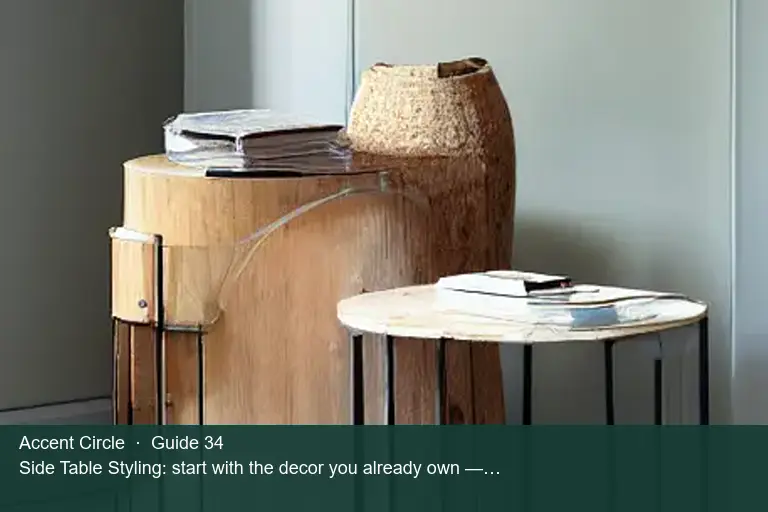
Side Table Styling: start with the decor you already own — process map for incomplete measurements; setup in shared households
**Side Table Styling: Start with the Decor You Already Own**
As we navigate through the world of side table styling, it's crucial to begin with the decor you already have. This step-by-step process helps ensure that any side table you select is not only functional but also a reflection of your personal style and preferences. In this article, we'll walk you through the process of creating an effective side table, starting with the decor you already own.
### Step 1: Assess the Space
Before you start designing your side table, it's essential to assess the space you have available. This means evaluating the size of the room, the layout of the walls, and the amount of space you have for storage and display. Start with the space analysis to ensure that the room is not only spacious but also functional.
#### Step 2: Gather the Necessary Tools
Once you've assessed the space, gather the necessary tools. These could include a ruler to measure the dimensions of the room, a measuring tape for precise measurements, and a measuring cup for precise measurements. These tools will be crucial in determining the size and shape of the side table.
#### Step 3: Measure the Room
Measure the room to ensure it's not only large but also functional. This involves measuring the length, width, and height of the room. If the room is large, you may need to measure it in increments of 100 square feet to ensure you cover the entire space. If the room is not large but still large, you might need to measure it in increments of 50 square feet to cover the entire space.
#### Step 4: Determine the Size and Shape of the Side Table
Now that you've measured the room, it's time to determine the size and shape of the side table. This could involve measuring the length and width of the room and then calculating the total surface area. The shape of the side table will depend on the space you have available and your personal style. For instance, a small room might require a simple, rectangular table, while a large room might need a more complex, round table.
#### Step 5: Choose a Side Table
Once you've determined the size and shape of the side table, it's time to choose a side table. This could involve searching for side tables that match your personal style and preferences. Some common styles include modern, traditional, rustic, and contemporary. Consider the features and materials you want in your side table, such as a top that matches your color scheme, a surface that is easy to clean, and a back that provides storage.
#### Step 6: Set Up in Shared-Household Plans
If you're creating a side table for multiple household members, it's important to set it up in shared household plans. These plans help ensure that everyone in the household has access to the same side table. This is especially important if you have multiple people in your household or if you have a large room that needs to be shared.
#### Step 7: Decorate the Side Table
Once you've set up the side table in shared household plans, it's time to decorate it. This could involve adding decorative elements such as plants, photos, or a small piece of art. This step is crucial in making the side table a functional and stylish addition to your home.
### Conclusion
By following this process, you can start with the decor you already own for side table styling. This step-by-step approach ensures that the side table you select is not only functional but also a reflection of your personal style and preferences. Remember, the most important thing is to start with the decor you already own, and then work your way through the process to create a side table that is both functional and stylish.